
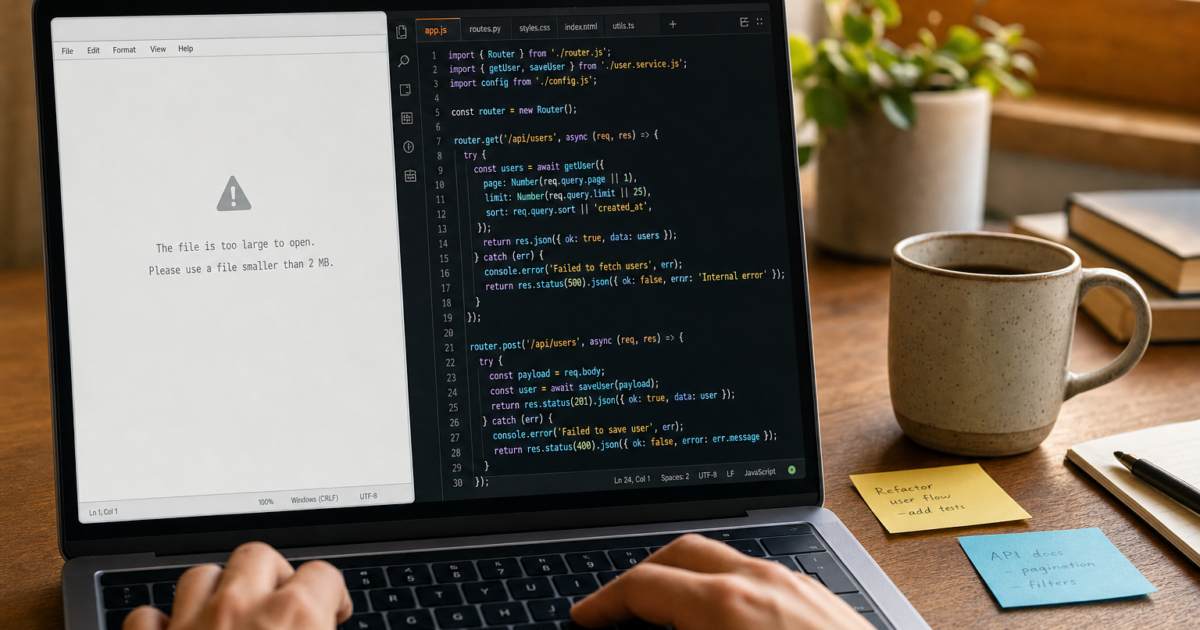
If you’ve been struggling with Windows Notepad’s limitations, no tabs, no syntax highlighting, no real search-and-replace, you’re not alone. Notepad has come a long way since its humble beginnings (it’s been in Windows since version 1.0!), and the 2026 version actually has tabs, dark mode, and even Copilot AI features baked in. But for a lot of people, that’s either too much or still not enough.
Maybe you want something minimal and offline with no AI phoning home. Maybe you need syntax highlighting for code. Maybe you’re just tired of Notepad choking on a 500MB log file. Whatever your reason, there are some genuinely great Notepad replacements out there, and this guide covers the 10 best ones for Windows in 2026, so you can find the right fit and stop dealing with a text editor that wasn’t built for what you’re trying to do.
What to Look for in a Notepad Replacement
Not all text editors are created equal, and the “best” one really depends on what you’re trying to do. Before diving into the list, here’s what’s worth thinking about:
- Speed and weight: Some editors are tiny and launch instantly. Others (like VS Code) are powerful but take a second to fire up. Pick based on how often you’re opening quick text files vs. doing serious work.
- Tabs and multi-document support: If you’re juggling multiple files at once, tabs are a must.
- Syntax highlighting: If you write code, HTML, CSS, or config files, this makes everything easier to read and debug.
- Encoding and large file support: Notepad still struggles with big files and weird line endings. A good replacement handles UTF-8, Unix line endings, and multi-gigabyte files without breaking a sweat.
- Portable version: On a work PC where you can’t install software? Many of these editors offer a portable version you can run straight from a USB drive, no admin rights needed.
- Plugin support: If you want to extend your editor with extra tools (spell check, FTP, JSON formatting, etc.), plugin support is a big deal.
With that in mind, here are the 10 best programs to replace Notepad in 2026.
1. Notepad++
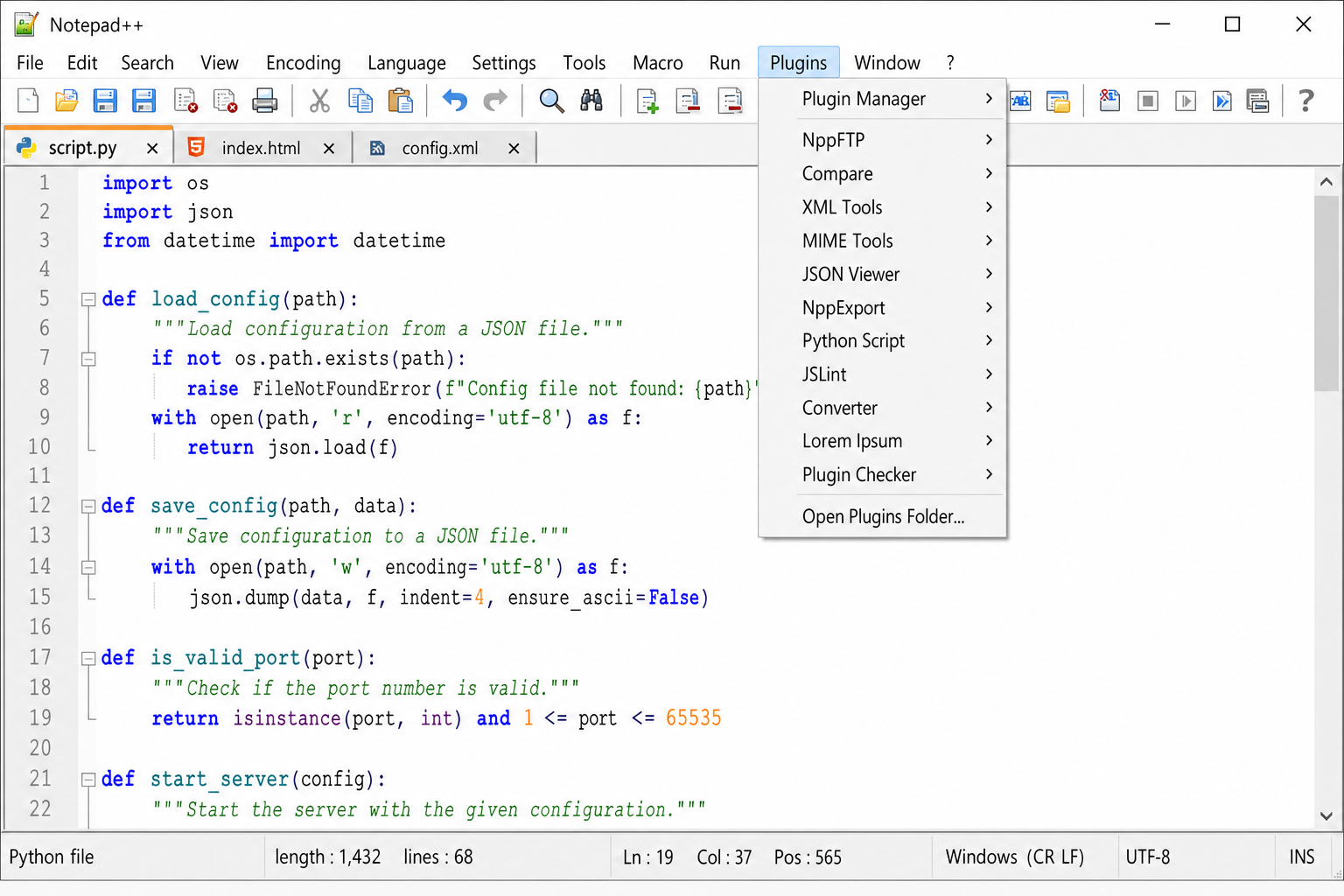
Notepad++ is still the king of Notepad replacements, and it’s not particularly close. It’s been the go-to free text editor for Windows users for years, and it keeps getting better. If you only try one editor from this list, make it this one.
It’s fast, lightweight, and packed with features, but it never feels bloated. You get tabs, a powerful search-and-replace (with regex support, which is a way to search using patterns, not just exact words), syntax highlighting for dozens of programming languages, macro recording, and a huge plugin library that adds things like spell check, FTP access, JSON formatting, and more.
- Platform: Windows only
- Price: Free and open source
- Best for: Pretty much everyone, casual users and developers alike
- Portable version: Yes, great for USB drives or locked-down PCs
You can grab it from the official Notepad++ site or the Microsoft Store. Just make sure you download from there, not a random third-party mirror that might bundle junk software.
2. Visual Studio Code
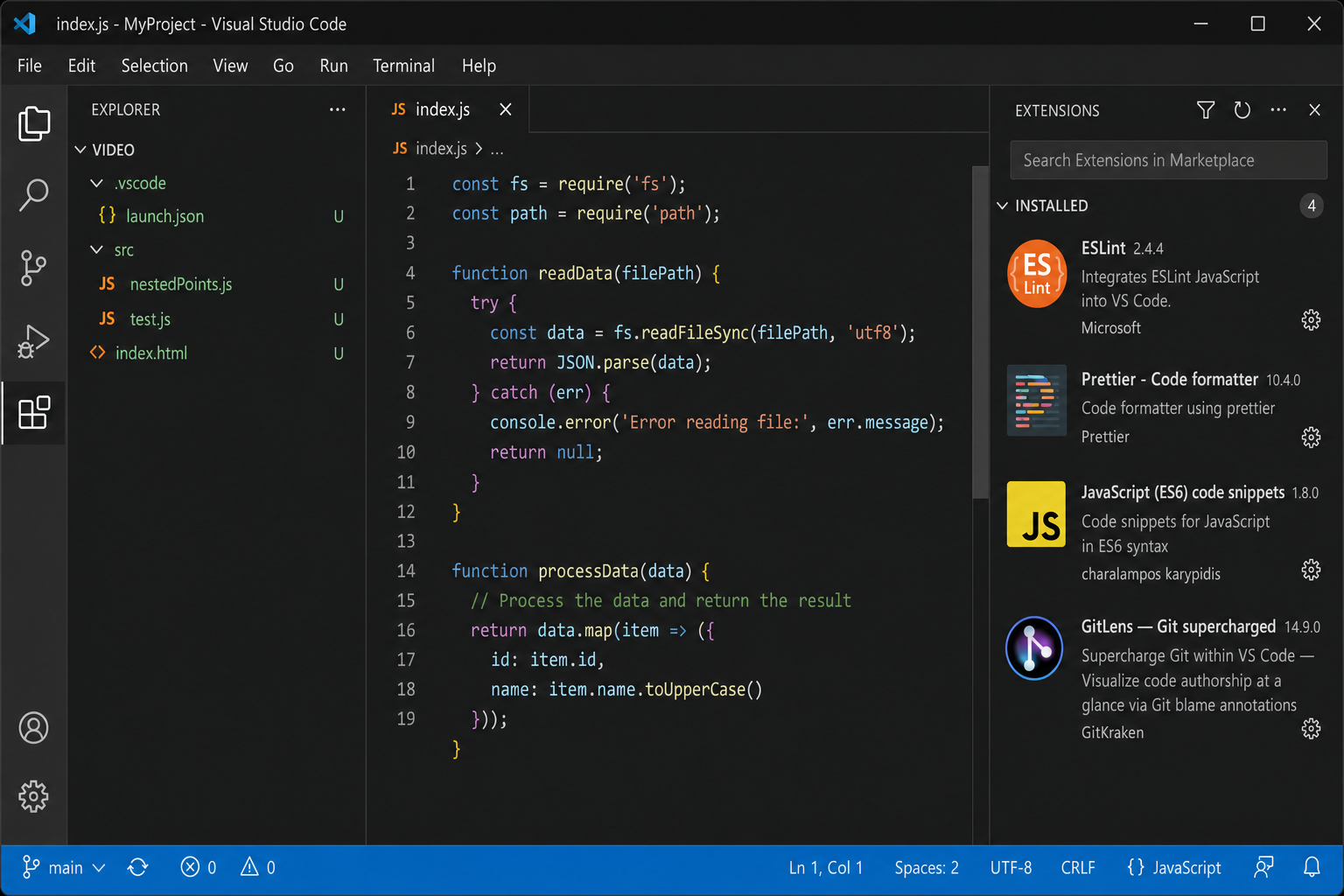
Visual Studio Code (everyone just calls it VS Code) is Microsoft’s free code editor, and it’s become the dominant tool for developers worldwide. It’s technically more than a text editor. It’s basically one editor to rule them all for anyone who works with code regularly.
VS Code is heavier than Notepad++. It takes a moment to launch, but what you get in return is incredible. There’s a built-in terminal, Git integration (for tracking changes to your files), debugging tools, AI coding assistance, and a massive library of extensions for every language and workflow imaginable.
- Platform: Windows, macOS, Linux
- Price: Free
- Best for: Developers and power users who want one editor for everything
- Portable version: Yes (portable ZIP available on the official site)
If you’re not a coder, VS Code might be overkill for editing the occasional config file. But if you spend any real time writing code, it’s hard to beat.
3. Sublime Text
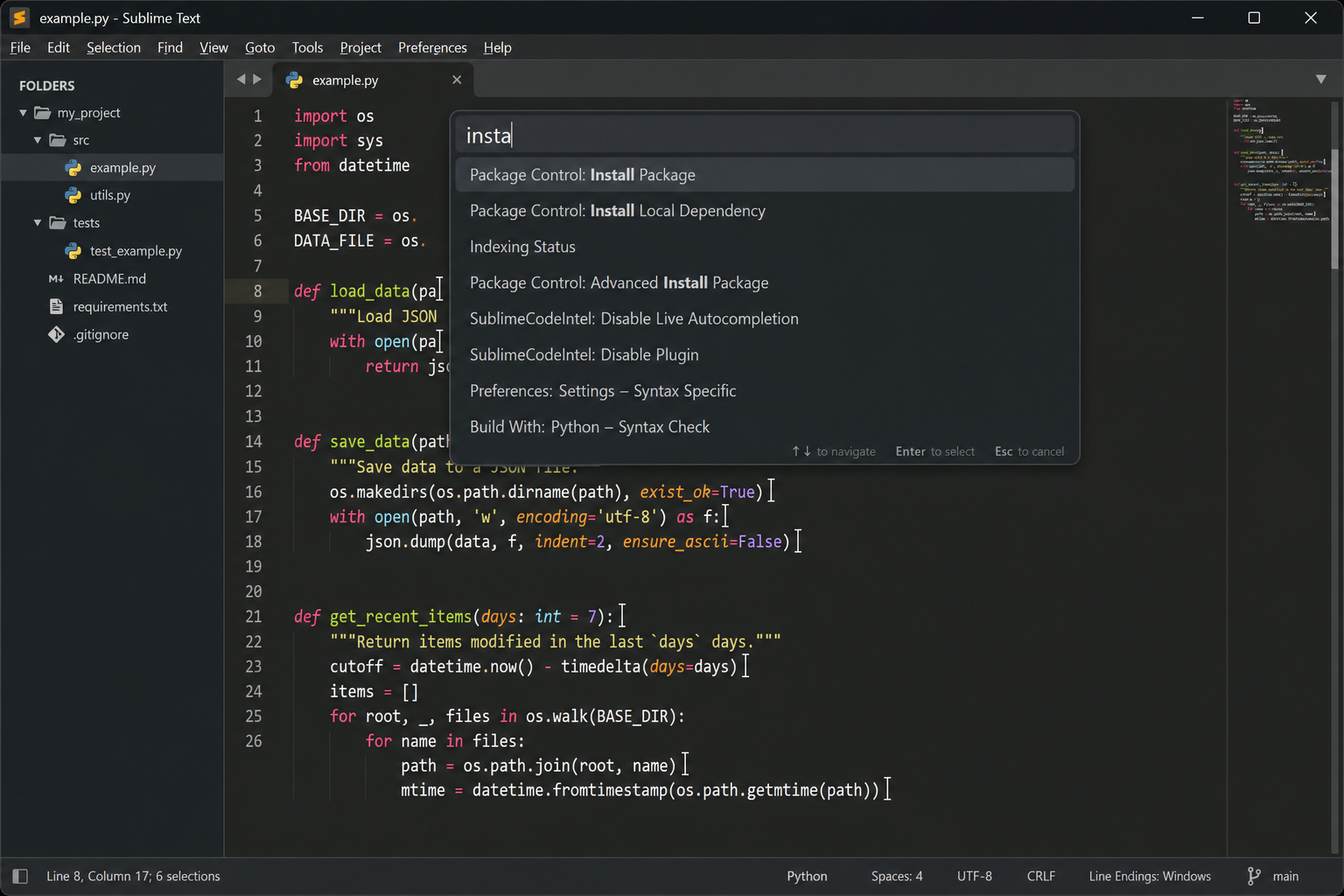
Sublime Text has been around for a while, and it’s still one of the fastest and most polished editors you can use. The thing that makes Sublime special is how snappy it feels. Even on large files, it never lags. And the multi-cursor editing feature (where you can edit multiple lines simultaneously) is genuinely one of the best productivity tricks in any text editor.
Sublime Text is free to evaluate indefinitely, but it will occasionally show a pop-up asking you to buy a license. The paid license is a one-time purchase, which is worth it if you use it daily.
- Platform: Windows, macOS, Linux
- Price: Free to evaluate; paid license for continued use
- Best for: Users who want speed, a clean UI, and powerful editing without the Microsoft ecosystem
- Portable version: No official portable version
4. Notepad3
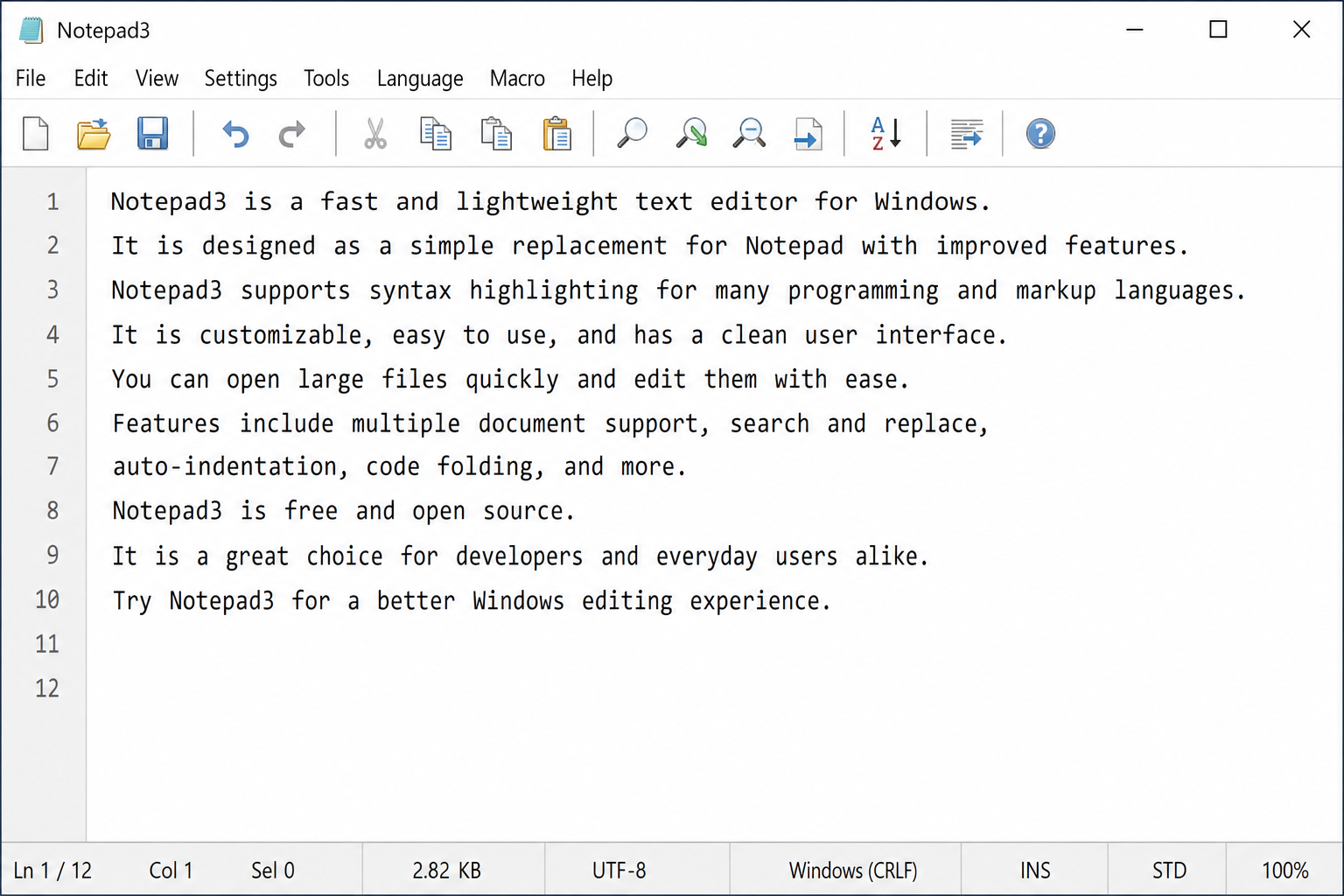
If what you really want is classic Notepad, but better, Notepad3 is exactly that. It looks and feels almost identical to the original Notepad, but adds the features that should have been there all along: syntax highlighting, line numbers, Unicode support, proper encoding handling, and a decent search-and-replace.
This is also the best option if you’re frustrated by the new AI features Microsoft has been adding to Windows Notepad. Notepad3 is offline, lightweight, and doesn’t try to summarize your text or “explain with Copilot.” It just opens your file and gets out of the way.
- Platform: Windows only
- Price: Free and open source
- Best for: Users who want a minimal, no-nonsense Notepad upgrade without any AI or cloud features
- Portable version: Yes
5. UltraEdit
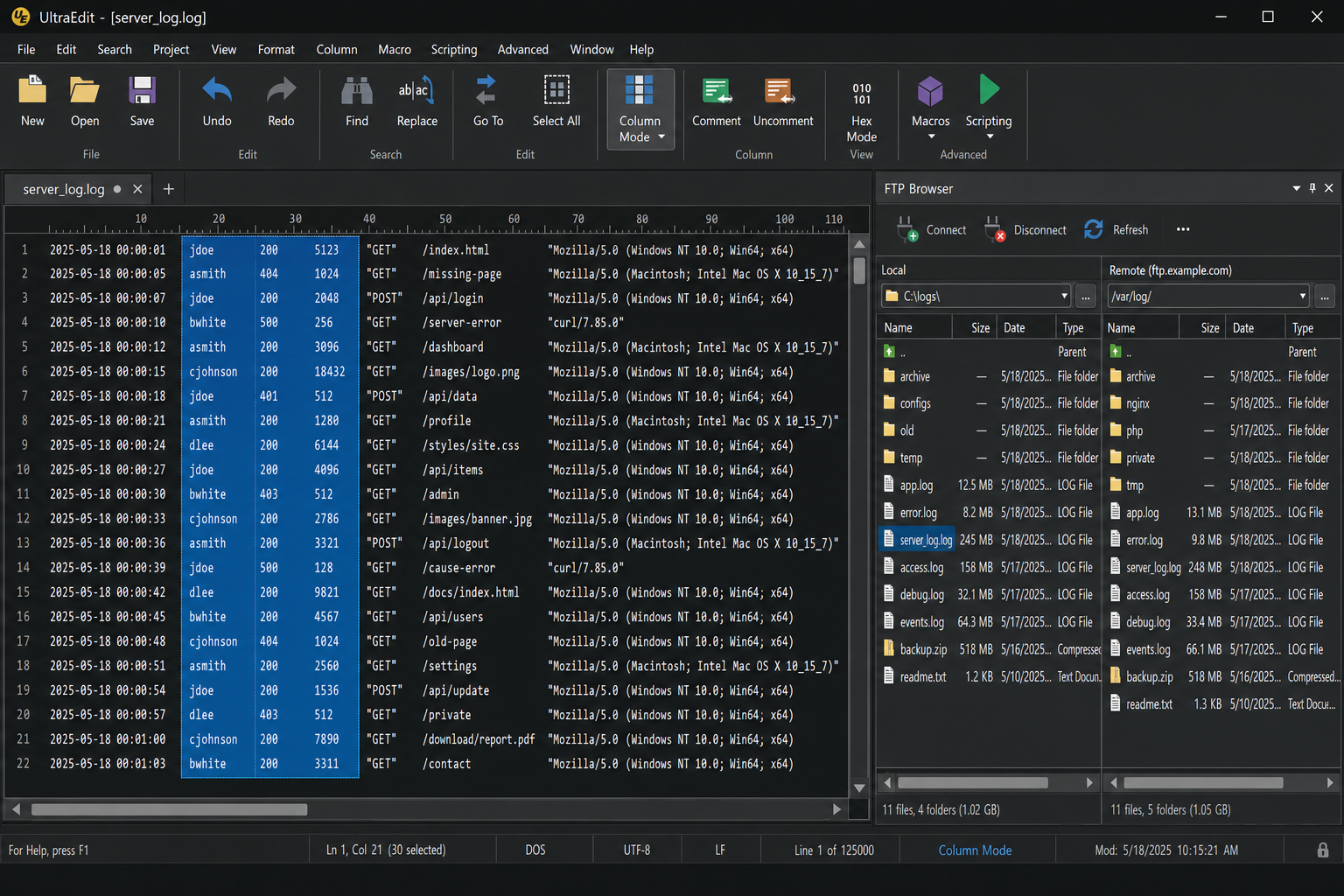
UltraEdit is the editor you want when you need to open a file that’s too big for everything else. We’re talking multi-gigabyte log files, massive CSVs, giant data exports, the kind of stuff that makes Notepad crash and even Notepad++ slow down. UltraEdit handles them without breaking a sweat.
On top of that, it has column mode editing (super useful for working with structured data), a built-in hex editor (for viewing raw file data), integrated FTP/SFTP access, and advanced find-and-replace. It’s a professional tool with a price tag to match, but if you’re regularly working with huge files, it pays for itself fast.
- Platform: Windows, macOS, Linux
- Price: Paid (subscription or one-time license; free trial available)
- Best for: Professionals who work with very large files and need a reliable, fully-featured editor
- Portable version: Yes
6. EditPad Lite
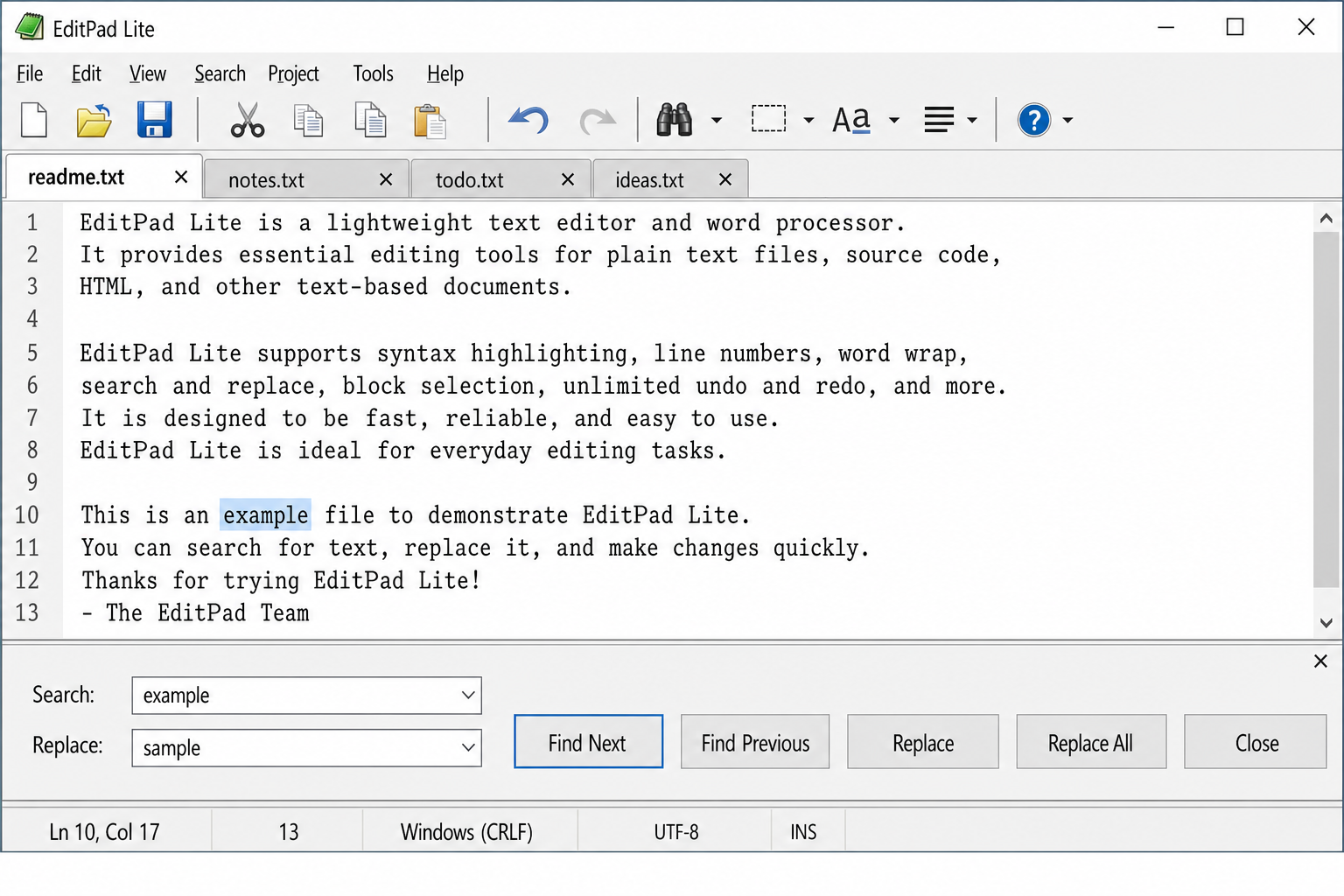
EditPad Lite sits in a sweet spot between bare-bones Notepad and a full-featured code editor. It’s not trying to be a coding tool. It’s trying to be the best plain text editor it can be, and it does a pretty good job of that.
You get unlimited tabs, a genuinely excellent search-and-replace feature, auto-save and backup so you never lose your work, unlimited undo/redo even after saving, and a Clip Collection that stores reusable text snippets. If you’re not a coder and just want a smarter, friendlier Notepad, EditPad Lite is worth a look.
- Platform: Windows only
- Price: Free (a paid Pro version adds more features)
- Best for: Non-coders who want a clean, capable text editor without syntax highlighting complexity
- Portable version: No
7. PSPad
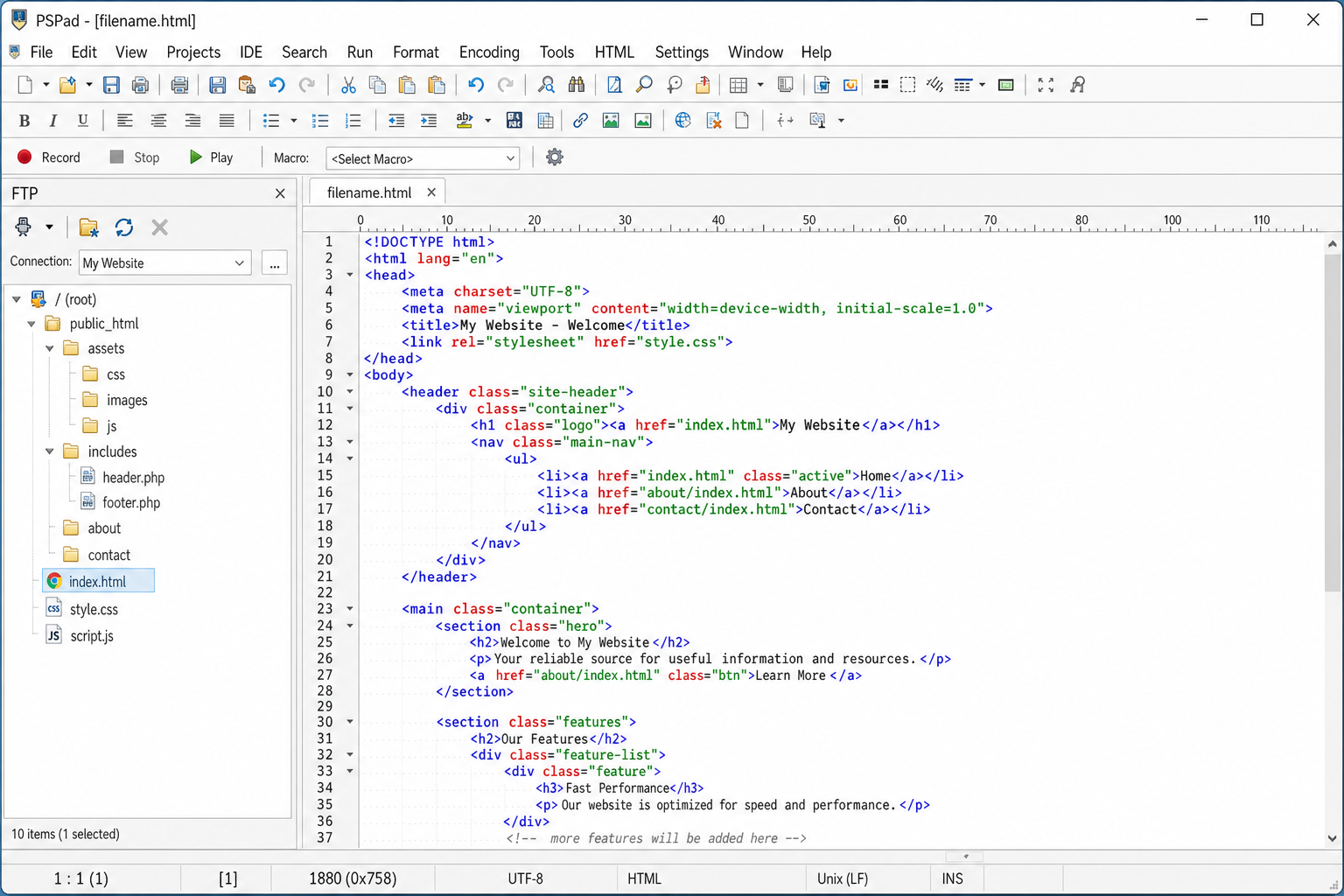
PSPad is a free Windows editor that packs in a lot of features for coders: syntax highlighting, a built-in FTP client, a macro recorder, a full hex editor, and an integrated CSS editor. For a free tool, that’s a solid feature set.
It also handles the basics well, including spell check, auto-correction, text comparison, search-and-replace, and multiple tabs. One thing to watch out for: PSPad has historically bundled extra software during installation. Always download from the official site and read each screen carefully during setup.
- Platform: Windows only
- Price: Free
- Best for: Windows users who want a free, feature-rich editor for coding and FTP work
- Portable version: Yes
8. Neovim (with a GUI frontend)
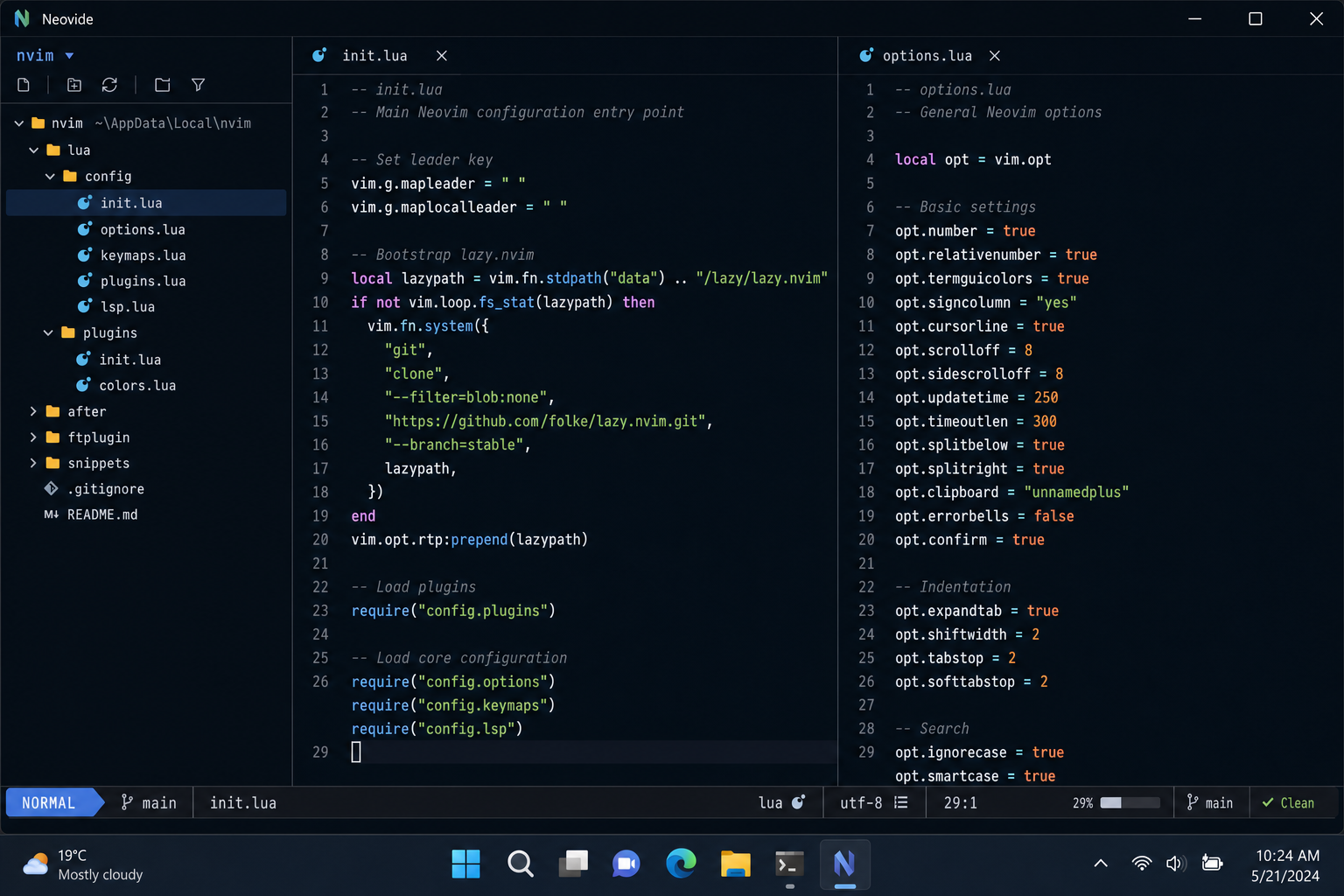
Okay, this one’s not for everyone, fair warning. Neovim is a modernized version of Vim, a classic text editor that uses keyboard shortcuts for everything instead of menus and mouse clicks. There’s a learning curve, and it’s steep. But once you get past it, Neovim is one of the fastest and most efficient editors you’ll ever use.
Neovim has a rich plugin ecosystem, supports Language Server Protocol (LSP, which gives you IDE-style code suggestions and error checking), and is highly configurable. If you’re coming from a Linux background or using Windows Subsystem for Linux (WSL), you probably already know about Vim/Neovim. For everyone else, this is more of a “someday” option than a quick Notepad swap.
- Platform: Windows, macOS, Linux
- Price: Free and open source
- Best for: Advanced users, Linux/WSL users, and developers who want maximum efficiency and customization
- Portable version: Yes
9. Kate
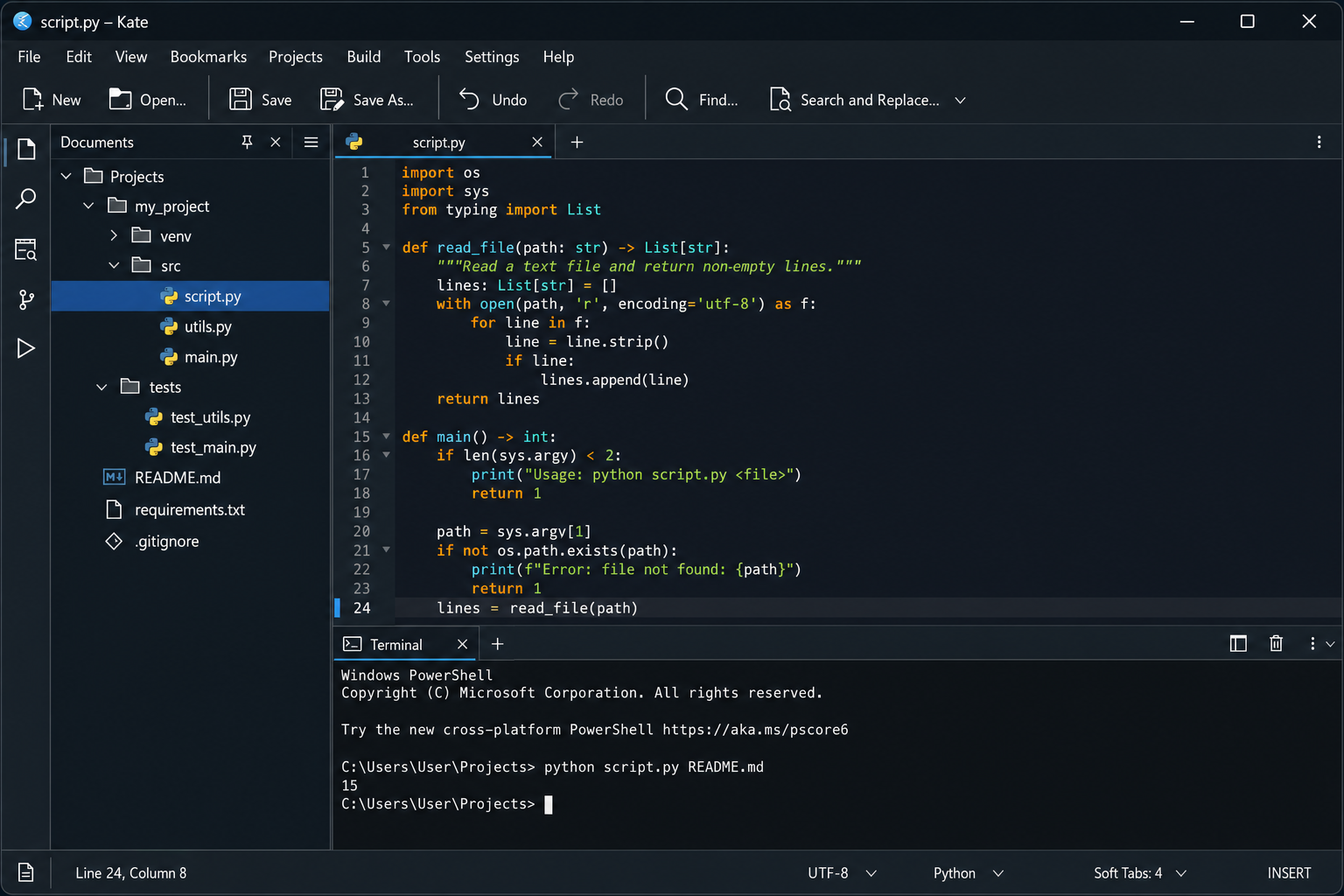
Kate is the default text editor for the KDE desktop environment on Linux, but it runs perfectly well on Windows too. It’s a proper advanced editor with tabs, split views, a built-in terminal, syntax highlighting for a huge number of languages, and a plugin system.
Kate is a great middle ground if you want more than Notepad++ but don’t want to commit to something as heavy as VS Code. It’s also completely free and open source.
- Platform: Windows, macOS, Linux
- Price: Free and open source
- Best for: Users who want a capable, multi-platform editor with a clean interface and no price tag
- Portable version: No official portable version
10. GetDiz
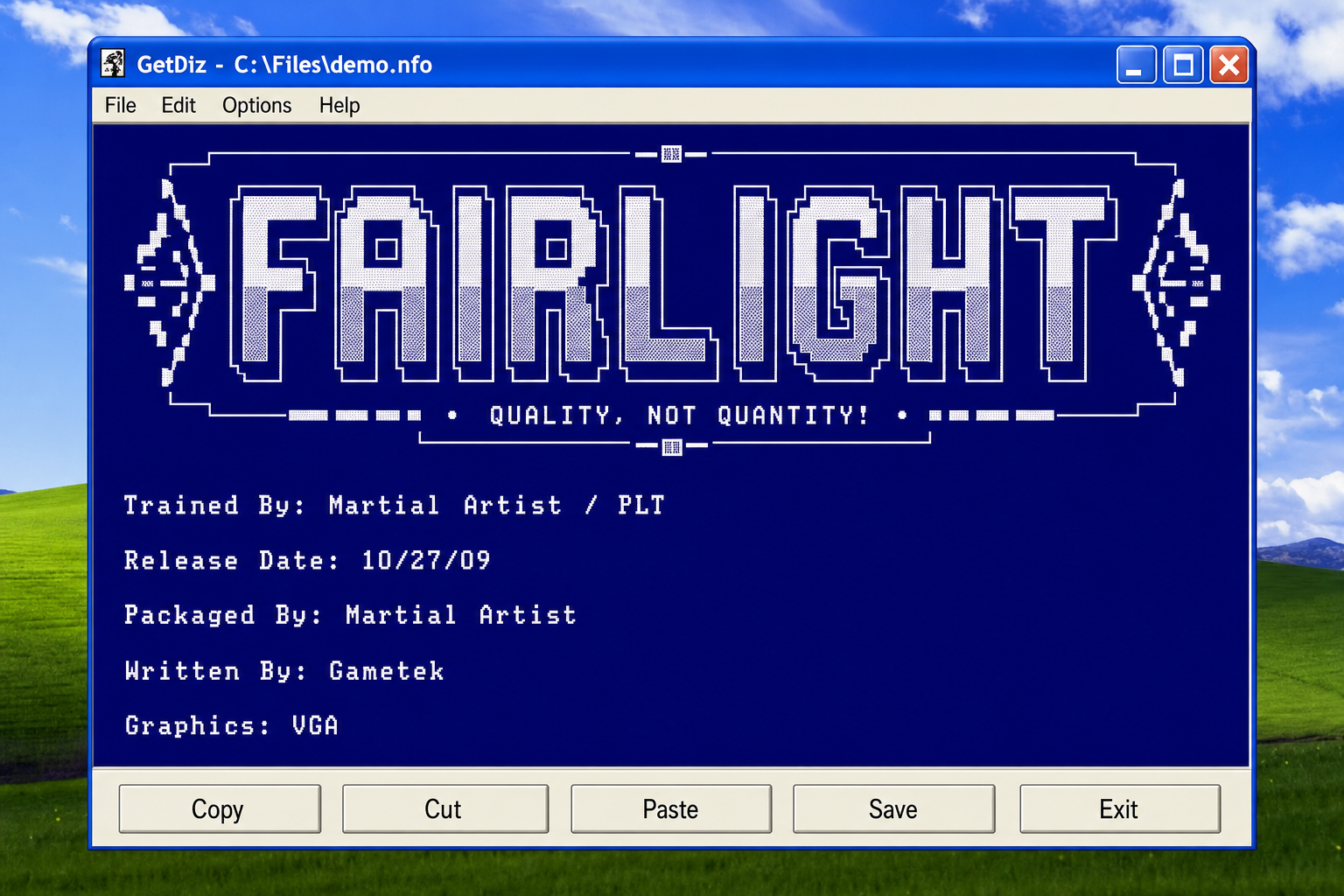
GetDiz is a niche pick, but it earns a spot on this list for one specific reason: it’s the best free tool for viewing NFO and DIZ files. Those are text-based files that often use ASCII art and special characters that regular Notepad completely mangles. If you’ve ever opened an NFO file in Notepad and seen a wall of garbage characters, GetDiz is the fix.
Beyond that specialty, it works fine as a basic Notepad replacement with a dark theme by default (dark blue background, white text, though you can change it). It’s not going to replace Notepad++ for power users, but for its niche, nothing else comes close.
- Platform: Windows only
- Price: Free
- Best for: Anyone who regularly works with NFO, DIZ, or ASCII art files
- Portable version: Yes
Quick Comparison
| Editor | Platform | Price | Best For | Portable |
|---|---|---|---|---|
| Notepad++ | Windows | Free | Everyone | Yes |
| VS Code | Win/Mac/Linux | Free | Developers | Yes |
| Sublime Text | Win/Mac/Linux | Free/Paid | Speed & polish | No |
| Notepad3 | Windows | Free | Minimal, no AI | Yes |
| UltraEdit | Win/Mac/Linux | Paid | Huge files | Yes |
| EditPad Lite | Windows | Free | Non-coders | No |
| PSPad | Windows | Free | Coders + FTP | Yes |
| Neovim | Win/Mac/Linux | Free | Advanced users | Yes |
| Kate | Win/Mac/Linux | Free | Multi-platform | No |
| GetDiz | Windows | Free | NFO/DIZ files | Yes |
How to Set Your New Editor as the Default for .txt Files
Once you’ve picked your editor, you’ll probably want it to open automatically whenever you double-click a text file. Here’s how to do that on modern Windows.
On Windows 11
- Right-click any
.txtfile and select Open with > Choose another app. - Select your new editor from the list (if it doesn’t appear, click More apps or Look for another app on this PC to browse to it).
- Check the box that says Always use this app to open .txt files.
- Click OK.
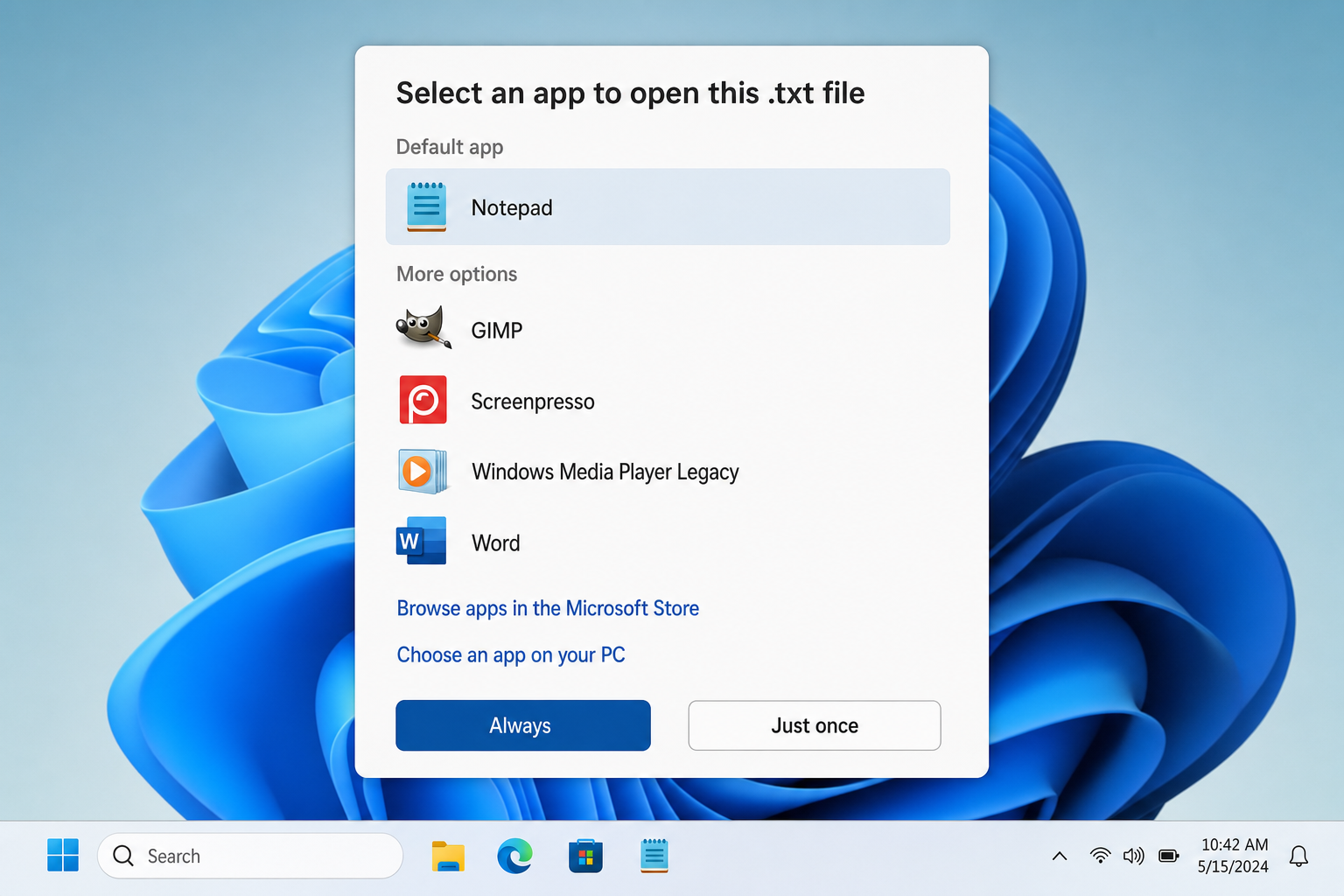
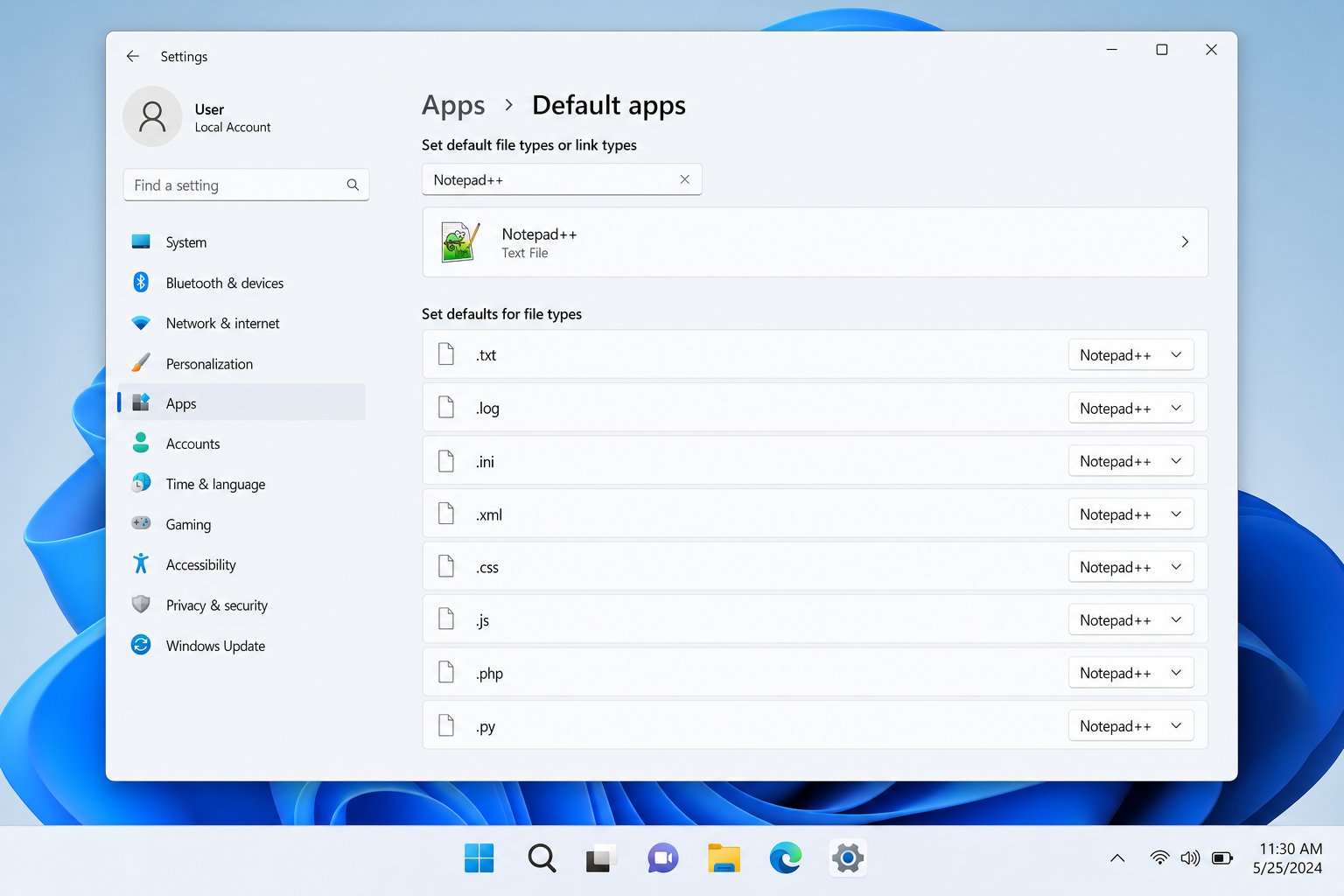
You can also do this through Settings:
- Open Settings by pressing
Windows + I. - Go to Apps > Default apps.
- Search for your editor by name and click on it.
- Assign the file types you want it to handle (like
.txt,.log,.ini).
On Windows 10
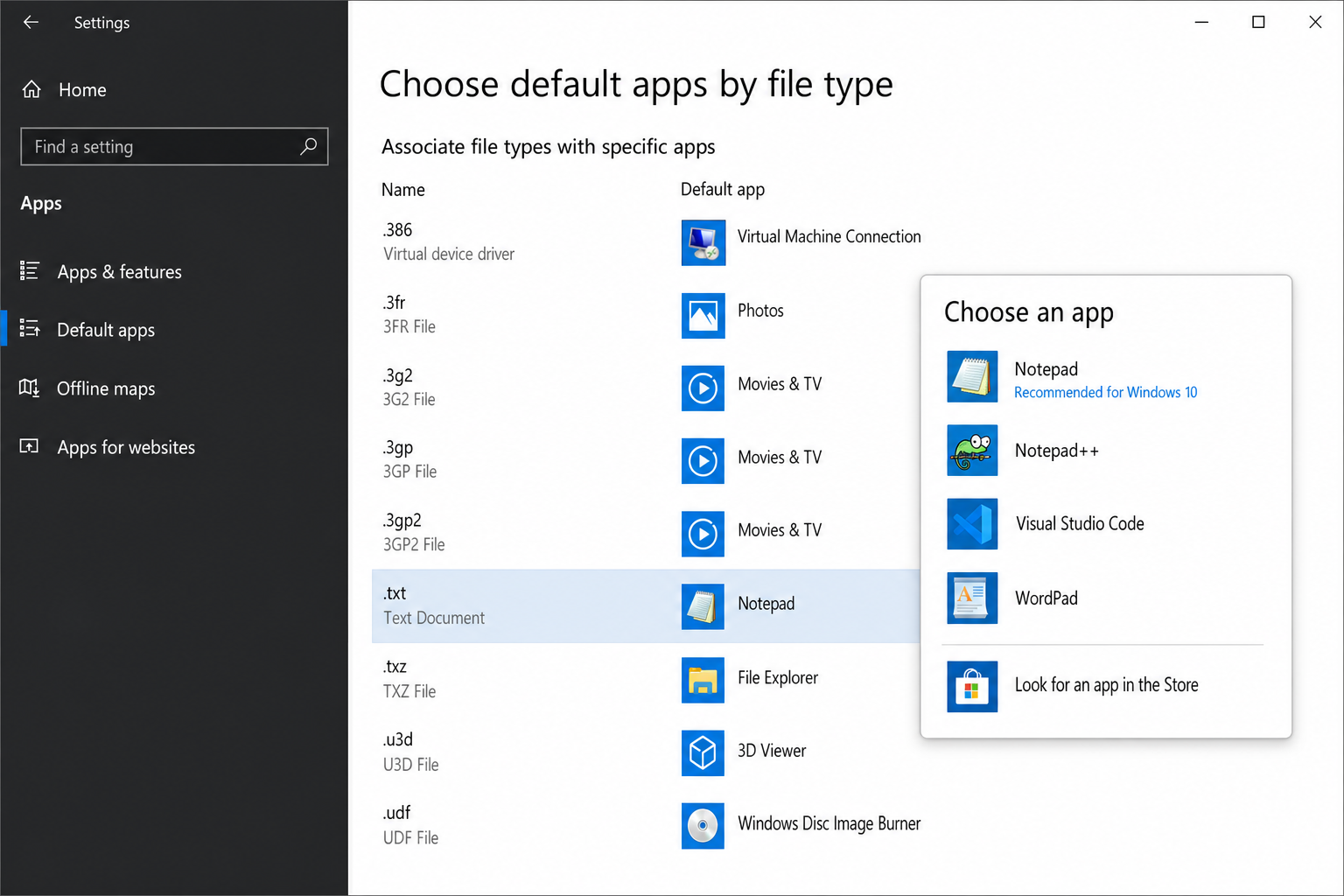
- Open Settings and go to Apps > Default apps.
- Scroll to the bottom and click Choose default apps by file type.
- Find
.txtin the list, click the current default app next to it, and choose your new editor.
Tips and Troubleshooting
Common Issues
Problem: My new editor doesn’t show up in the “Open with” list
This usually means the editor wasn’t registered properly during installation. Try this:
- In the Open with dialog, click More apps.
- Scroll to the bottom and click Look for another app on this PC.
- Browse to where your editor is installed (usually
C:\Program Files) and select the.exefile.
Problem: I can’t install anything on my work PC
Look for a portable version of your chosen editor. Notepad++, Notepad3, PSPad, and several others offer portable versions that run directly from a folder or USB drive, no installation, no admin rights needed. Just download the portable ZIP, extract it anywhere, and run the .exe.
Problem: I downloaded an editor and it came with junk software
Always download from the official website or the Microsoft Store, never from third-party download portals like Softonic, CNET Downloads, or similar sites. Those often wrap installers with bundled adware. The official sites for every editor on this list are linked above.
Pro Tips
- Add “Edit with [Editor]” to your right-click menu: Most editors offer this during installation, so look for a checkbox that says something like “Add to context menu.” If you skipped it, check the editor’s Settings or Preferences for an integration option.
- Not sure which to pick? Start with Notepad++. It handles 95% of use cases, it’s free, and it won’t slow down your PC. You can always try something else later.
- Already a VS Code user? You don’t need another editor. Just set VS Code as your default for text files and you’re done.
- Skip Atom: If you’ve seen Atom recommended in older articles, ignore it. GitHub and Microsoft officially archived Atom, and development has completely stopped. VS Code is the modern replacement.
Wrapping Up
You no longer have to deal with a text editor that can’t handle tabs, chokes on big files, or now wants to summarize your grocery list with AI. Whether you go with the reliable Notepad++, the powerhouse VS Code, or the classic-feeling Notepad3, any of these editors will make your day-to-day text editing noticeably better. Honestly, if you’re not sure where to start, just grab Notepad++. It’s free, it’s fast, and it’ll handle pretty much anything you throw at it. If you’re already using a Notepad replacement we didn’t mention, drop it in the comments!