

So you’ve been thinking about becoming an Instagram influencer, making money doing something you already love, building a community around your passion, and maybe even landing some brand deals along the way. Sounds great, right? But if you’ve tried posting and scrolling on Instagram consistently and still feel like you’re shouting into the void, you’re not alone. The path to becoming a real Instagram influencer in 2026 looks very different from what it did just a few years ago, and a lot of the old advice simply doesn’t work anymore.
The good news: it’s absolutely still possible, and in some ways, it’s easier than ever if you know what actually moves the needle. In this guide, you’ll learn exactly how to set up your account, what kind of content to create, how to build a real community, and how to start making money from it. No fluff, no outdated tips. Just what works right now.
What Is an Instagram Influencer?
An Instagram influencer is someone who has built a reputation and a loyal audience around a specific topic, called a niche, on Instagram. Their followers trust their opinions and recommendations, which is exactly what makes them valuable to brands.
Here’s the thing most people get wrong: you don’t need millions of followers to be an influencer. In 2026, brands are actively seeking out micro-influencers (10k–100k followers) and even nano-influencers (1k–10k followers) because those smaller audiences tend to be more engaged, more trusting, and more likely to actually buy something based on a recommendation.
Influencer tiers in 2026:
- Nano: 1k–10k followers
- Micro: 10k–100k followers
- Mid-tier: 100k–500k followers
- Macro: 500k–1M followers
- Mega/Celebrity: 1M+ followers
Brands care less about raw follower counts these days and more about your engagement rate (how many people actually like, comment, share, and save your posts), your niche clarity, and whether your audience matches their target customer. A nano-influencer with 5,000 highly engaged followers in the sustainable fashion space can be more valuable to the right brand than someone with 500,000 passive followers.
Do You Get Paid as an Instagram Influencer?
Yes, and there are more ways to earn than most people realize. Instagram influencers charge anywhere from $70 to $3,000+ per sponsored post depending on their niche, engagement rate, and audience size. But sponsored posts are just one piece of the puzzle.
In 2026, the smartest influencers diversify their income across multiple streams rather than relying on Instagram alone:
- Brand partnerships and sponsorships, the most common income source
- Affiliate marketing, earning a commission when followers buy through your unique links
- Digital products, ebooks, presets, templates, courses, or coaching
- UGC (User-Generated Content), creating content for brands to use on their own channels, which doesn’t even require a large following
- Off-platform revenue, email lists, YouTube, TikTok, podcasts, or paid communities
One important note: Instagram has pulled back on several of its direct creator payment programs (like Reels bonuses) in many regions. That’s why diversifying your income off-platform is no longer optional. It’s just smart business.
How To Become an Influencer on Instagram
Every influencer’s journey is a little different, but the foundation is the same. Here’s a step-by-step approach that actually works in 2026.
Step 1: Define Your Niche (Go Specific)
The biggest mistake new influencers make is picking a niche that’s way too broad. “Fitness” is a niche. “Strength training for busy office workers” is a micro-niche, and that’s what wins in 2026. Broad categories are saturated. Specific ones are not.
Ask yourself three questions before you settle on your niche:
- Who do I want to help? Be specific about the person, not just the topic.
- What transformation or result do I help them achieve?
- Why is my angle or approach different from everyone else’s?
Your niche can absolutely be a mix of things, if you’re a nurse who also loves budget travel, that combination is actually your unique angle. Lean into it. The clearer your niche, the easier it is for the right followers to find you, stick around, and eventually buy from you.
Some examples of micro-niches that work well:
- Not just “beauty” → “fragrance-free skincare for acne-prone skin”
- Not just “food” → “high-protein meal prep for people with under 30 minutes”
- Not just “parenting” → “screen-free activities for toddlers”
Step 2: Set Up and Optimize Your Profile
Your Instagram profile is your storefront. When someone new lands on it, they decide in about three seconds whether to follow you or bounce. Here’s how to make sure they stay.
Switch to a Professional Account
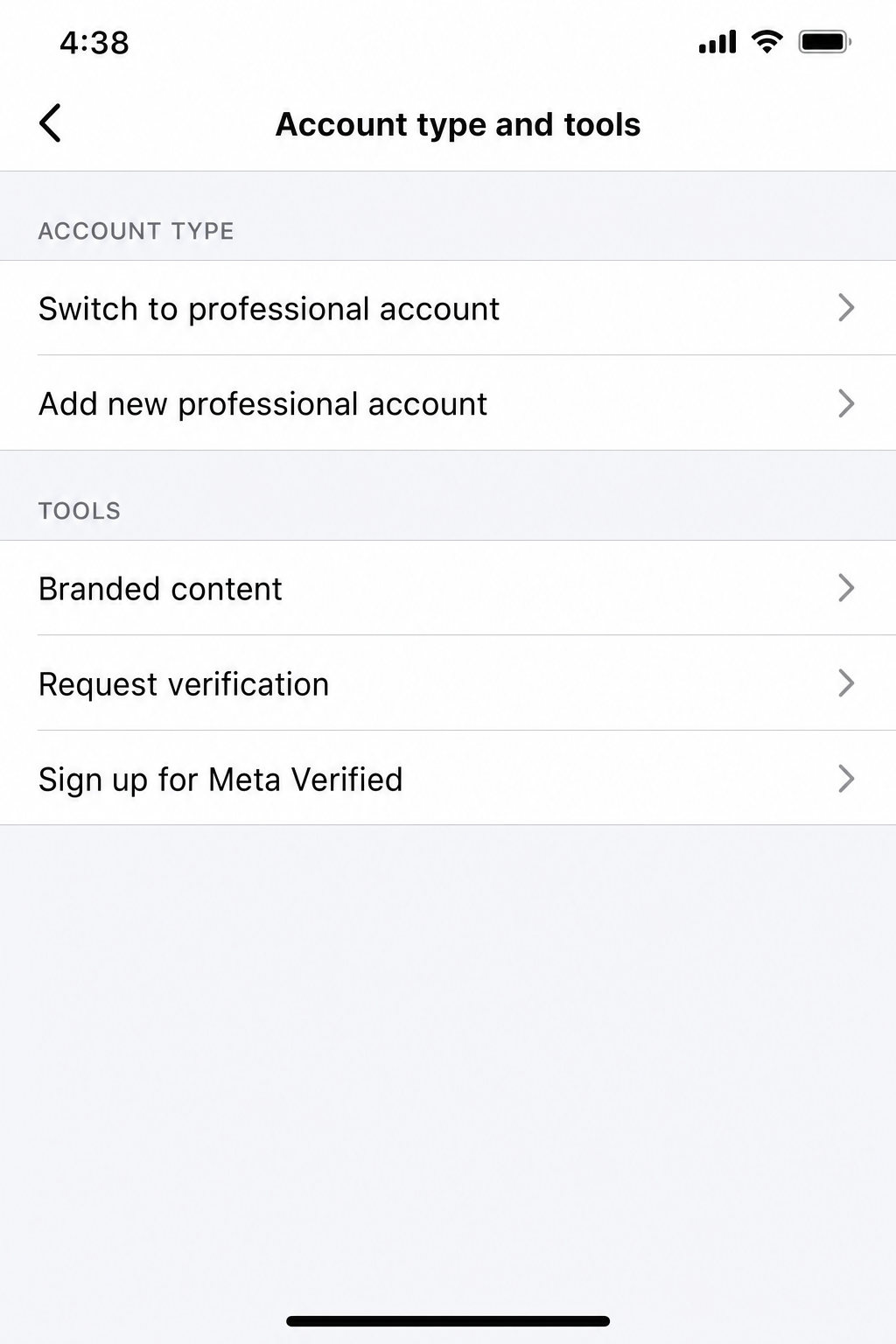
First things first, switch your account to a Creator or Business account. This unlocks Instagram analytics (called Insights), lets you add contact buttons, and gives you access to scheduling tools. Here’s how to do it:
- Go to your profile and tap the menu icon (≡) in the top-right corner.
- Tap Settings and privacy.
- Tap Account type and tools.
- Select Switch to professional account.
- Choose Creator (best for personal brands and content creators) or Business (better if you’re selling products or services).
- Pick a relevant category, options like “Digital creator,” “Public figure,” or “Blogger” work well for most influencers.
Optimize Your Username and Name Field
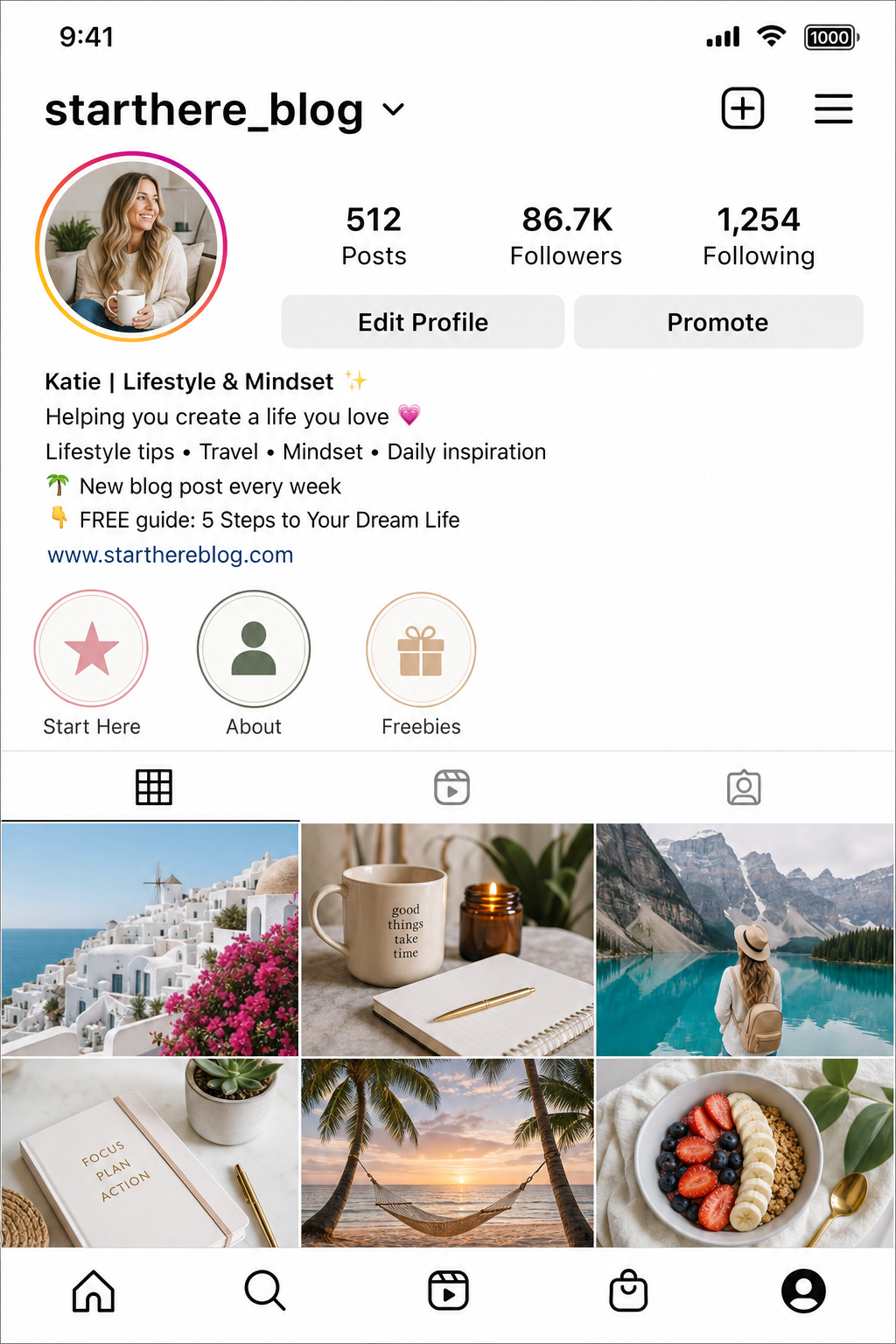
Your username should be simple, easy to spell, and consistent with your other social media handles. Your name field (the bold text at the top of your profile) is actually searchable on Instagram, so use it strategically. Instead of just “Sara,” try “Sara | Budget Travel Tips.” That way, people searching for budget travel content can actually find you.
Write a Bio That Works Hard
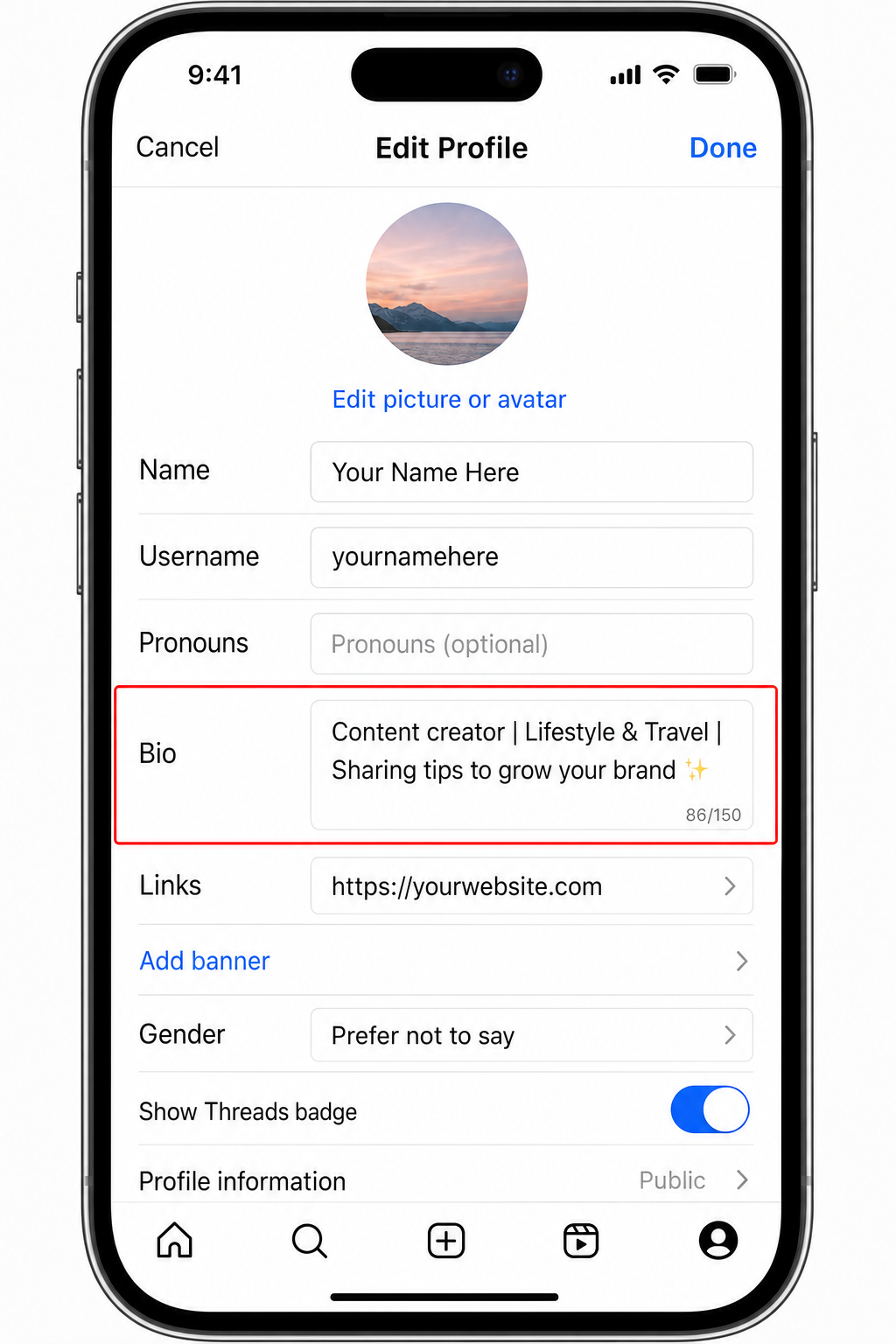
You’ve got 150 characters to tell someone who you are, who you help, and why they should follow you. Use them wisely. A good influencer bio follows this formula:
- Line 1: Who you help and what you do
- Line 2: Your unique angle or credibility
- Line 3: A call-to-action (CTA), like “⬇️ Free meal plan for beginners”
Use emojis as visual anchors to break up the text, just don’t go overboard.
Add Your Links
Instagram now supports multiple links natively. To add them, go to your profile, tap Edit Profile, then tap Links and select Add external link. You can also use a link-in-bio tool like Beacons, Stan Store, or Linktree to create a mini landing page with multiple destinations.
Set Up Story Highlights as a Mini Website
Think of your Story Highlights as a menu bar for your profile. New visitors will click through them to learn more about you before they decide to follow. Good Highlights to set up include:
- Start Here, introduce yourself and what you do
- About, your story and background
- Freebies, free resources you offer
- Testimonials, social proof from your community
- Brands, past partnerships (once you have them)
- FAQ, answers to common questions
Step 3: Build a Content Strategy Around Reels, Stories, and Carousels
Here’s the biggest thing that’s changed since 2022: Reels are no longer optional. They’re the primary way Instagram distributes content to new audiences, and if you’re not making them, you’re essentially invisible to anyone who doesn’t already follow you. That said, each content format has a different job to do, and using all three together is what separates growing accounts from stagnant ones.
Reels: Your Growth Engine
Reels consistently get 1.5–2x higher engagement than static photos, and they’re the main way new people discover your account. The algorithm’s biggest ranking signal for Reels is watch time, meaning how much of your video people actually watch before scrolling away. That makes your first 1–3 seconds absolutely critical.
A few things that work well for Reels in 2026:
- Hook immediately: Start with a bold statement, a surprising fact, or a visual that makes someone stop scrolling. “I gained 10k followers doing this one thing” works. “Hey guys, welcome back to my channel” does not.
- Use subtitles: Enable auto-captions in the Reels editor and clean them up manually. A huge chunk of people watch without sound.
- Tease the payoff early: Tell viewers what they’ll get at the end (“Wait till the end to see the before and after”) to boost retention.
- Use trending audio: Sounds with an upward arrow icon in the audio library are trending, and using them can give your Reel a boost in distribution.
Popular Reel formats right now include POV or “day in the life” content, before/after reveals, “3 tips to…” educational Reels, and trending audio-based meme formats.
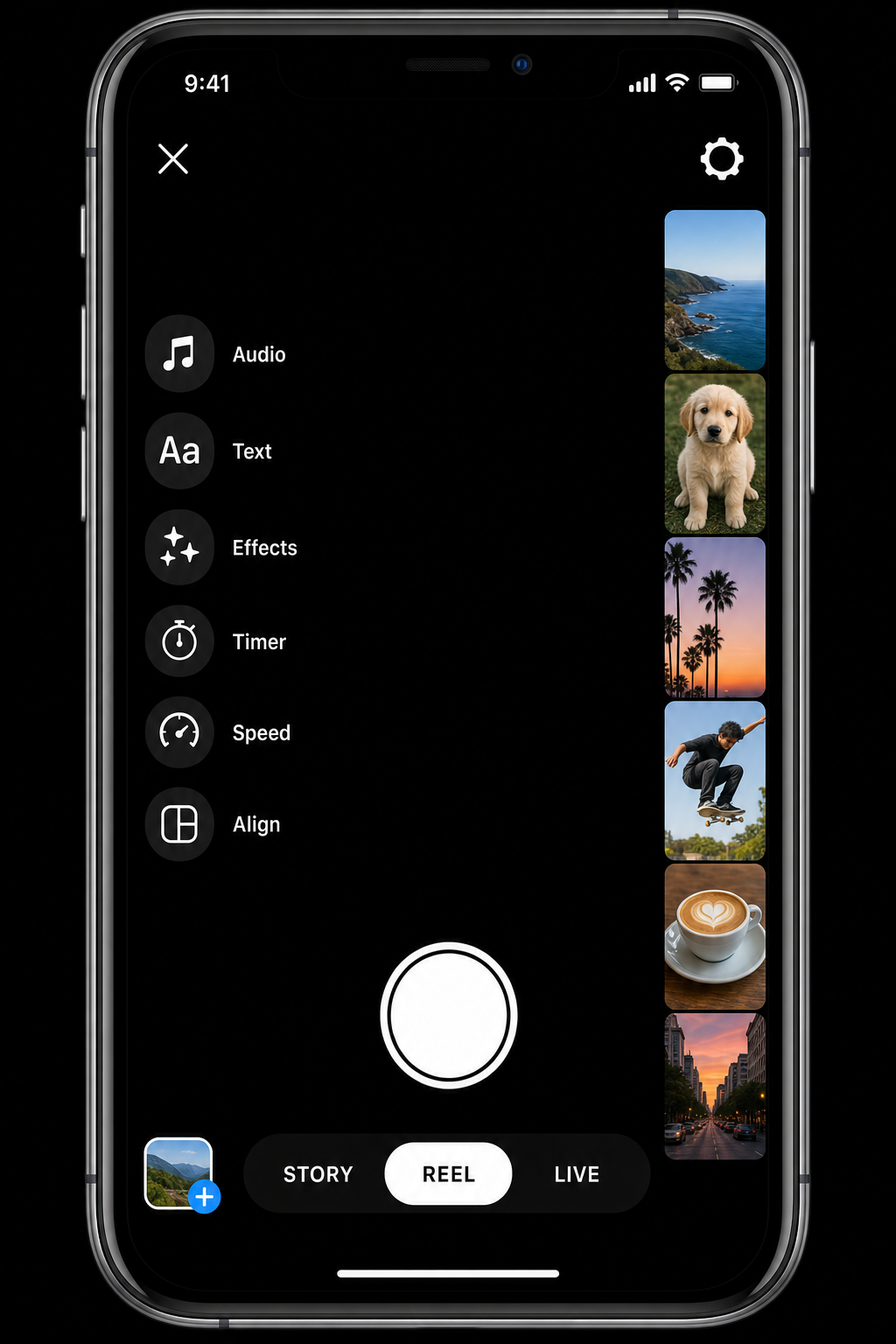
To create a Reel, tap the + button at the bottom of the app and select Reel.
Stories: Your Relationship Builder
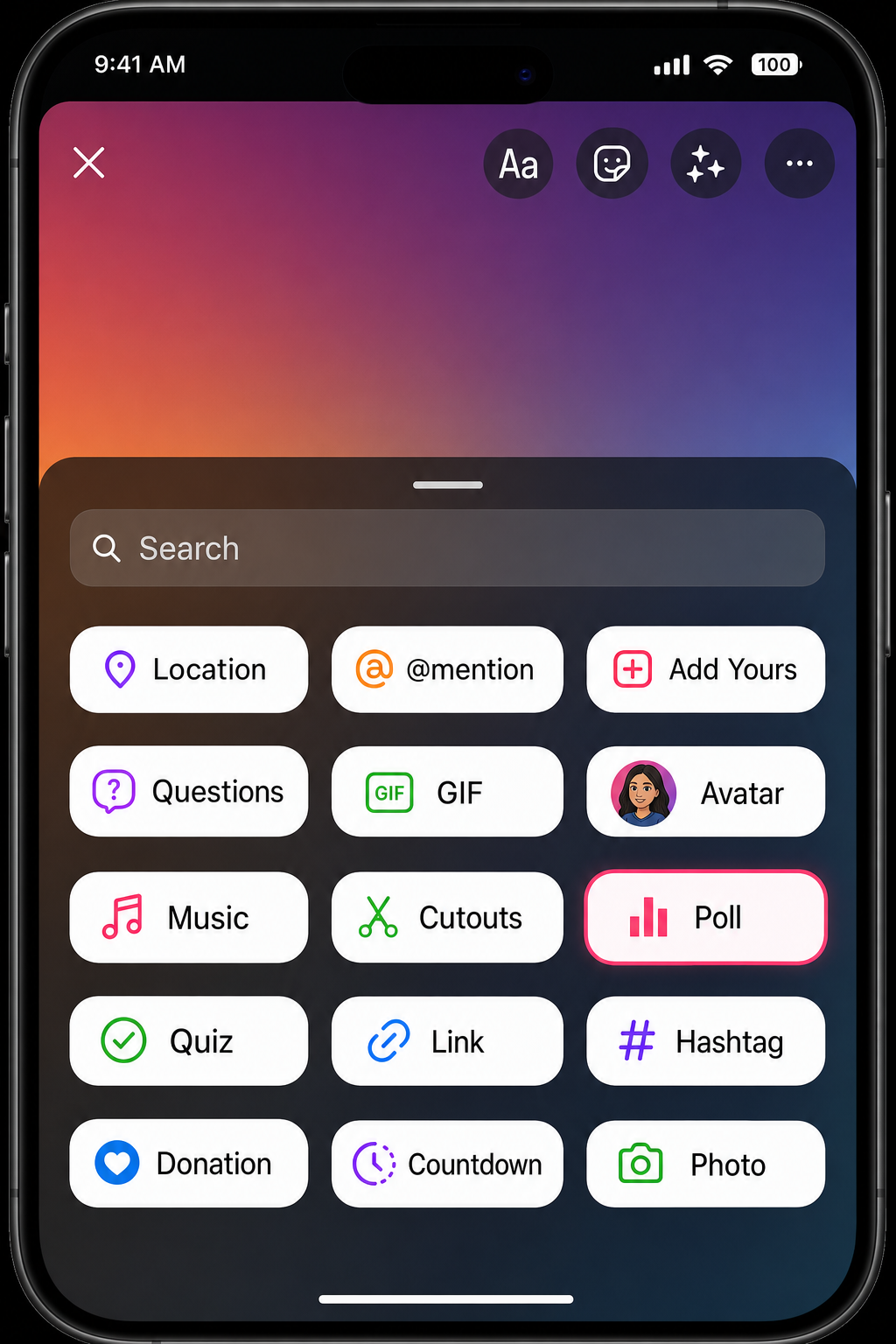
While Reels bring in new followers, Stories are where you turn those followers into a real community. Post to Stories daily if you can, and use interactive stickers to spark engagement:
- Polls, “Which do you prefer: A or B?”
- Question stickers, “Ask me anything about X”
- Quizzes, test your audience’s knowledge on your niche topic
- Link stickers, drive traffic to your website, freebie, or affiliate link
One of the most powerful things you can do with Stories is drive DMs. Something like “Reply to this Story with ‘guide’ and I’ll send you my free content planning template” gets people into your inbox, which signals to Instagram that you have a strong relationship with your followers and that boosts your future reach.
Carousels and Feed Posts: Your Credibility Content
Carousels (posts with multiple slides that followers swipe through) are still one of the best-performing formats for saves and shares, two signals that tell the algorithm your content is worth spreading. Use them for:
- Step-by-step tutorials (“Swipe to learn how to…”)
- Educational myth-busting posts
- Before/after comparisons
- Checklists and resource lists
Static photos still have a place too, they’re great for showcasing your aesthetic, sharing personal moments, and fulfilling brand deal requirements that call for a polished image.
Define Your Content Pillars
Before you start posting, map out 3–5 content pillars, the recurring themes that all your content falls under. This keeps your account focused and makes it much easier to come up with ideas. For example, a fitness influencer might use:
- Workouts (Reels)
- Nutrition and recipes (carousels + Reels)
- Education and myth-busting (carousels)
- Mindset and lifestyle (Stories)
- Community highlights (collab posts, client results)
Write Captions That Drive Action
A good caption follows a simple structure: value + story + CTA. The call-to-action is especially important. Some CTAs that work well right now:
- “Save this for later.”
- “Share this with a friend who needs to see it.”
- “Comment ‘guide’ and I’ll DM you the full breakdown.”
- “What’s your biggest struggle with X? Tell me in the comments.”
Step 4: Post Consistently (Without Burning Out)
Consistency beats volume every single time. It’s far better to post three great Reels a week for six months than to post every day for two weeks and then disappear. The Instagram algorithm rewards accounts that post regularly, and your audience learns to expect (and look forward to) your content.
A realistic posting schedule for most creators in 2026:
- 3–5 feed posts per week (a mix of Reels and carousels)
- Daily Stories (these disappear after 24 hours, so frequency matters more here)
To make consistency easier, batch your content creation. Spend one day filming and editing several Reels at once, then schedule them out using Instagram’s built-in scheduling tool (available to Professional accounts via the app or Meta Business Suite) or a third-party tool like Later, Buffer, or Metricool.
AI tools have also made this a lot easier. Tools like ChatGPT or Claude are great for drafting caption ideas, writing hooks for Reels, and planning out a content calendar when you’re feeling stuck. Think of them as a brainstorming partner. They won’t replace your authentic voice, but they can definitely speed things up.
Step 5: Build a Real Community (Not Just a Following)
Here’s something that separates influencers who actually make money from those who just have a lot of followers: community. Brands don’t just want reach. They want proof that your audience actually listens to you. That comes from genuine engagement, and it starts in your DMs and comment section.
Make DMs Your Secret Weapon
DMs are the highest-value engagement on Instagram right now. When someone DMs you, Instagram reads that as a strong relationship signal and prioritizes showing them your future content. Here’s how to drive more of them:
- Reply to every meaningful DM with a real response (not just an emoji).
- DM new followers with a short welcome message, something like “Thanks for following! What are you working on in [your niche]?”
- Use DM automation tools like ManyChat to deliver freebies automatically when someone comments a keyword. For example: “Comment ‘recipe’ below and I’ll send you my free meal prep guide.” This drives both comments and DMs at the same time, which is a double win for the algorithm.
Engage in the Comments
Reply to every comment, especially when you’re just starting out. Ask follow-up questions. Create content that naturally sparks conversation, vulnerable personal stories, strong opinions, or posts that ask your audience for their input (“What’s your go-to workout when you have 20 minutes?”).
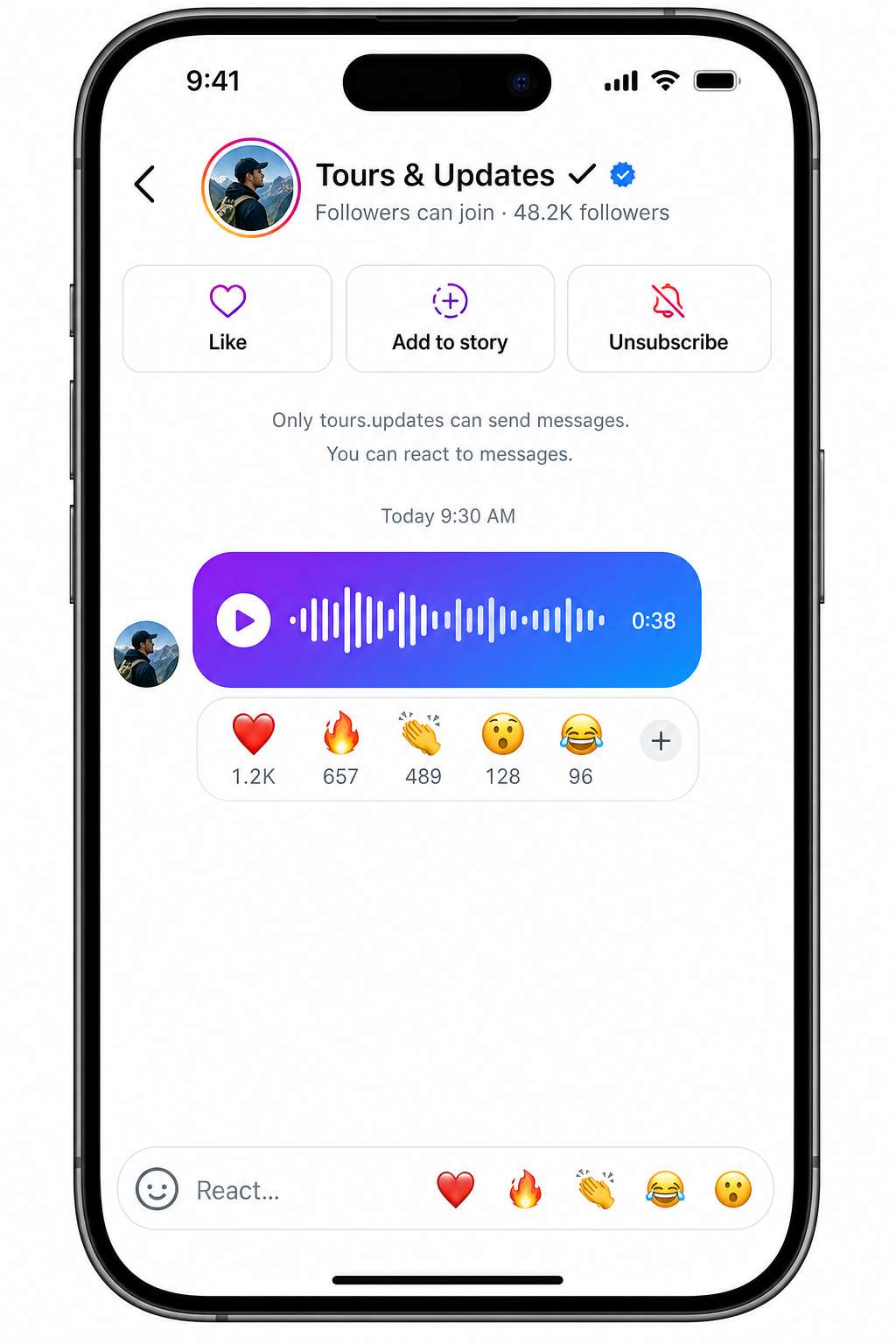
Use Collab Posts and Broadcast Channels
Collab posts are co-authored posts that appear on both creators’ profiles, which is a great way to cross-pollinate audiences with other influencers in your niche. Reach out to creators at a similar level to yours and propose a collab Reel or carousel. It’s one of the fastest organic growth strategies available right now.
Broadcast channels are a newer Instagram feature that lets you send one-to-many messages to followers who opt in. Think of it like a group chat where only you can post, great for sharing announcements, early access to content, or exclusive tips for your most engaged followers.
Step 6: Monitor Your Analytics and Adjust
Once you’ve switched to a Professional account, you have access to Instagram Insights, your built-in analytics dashboard. Check it weekly and use it to figure out what’s actually working (and what isn’t).
To access your analytics, go to your profile and tap Professional dashboard, then select Account Insights.
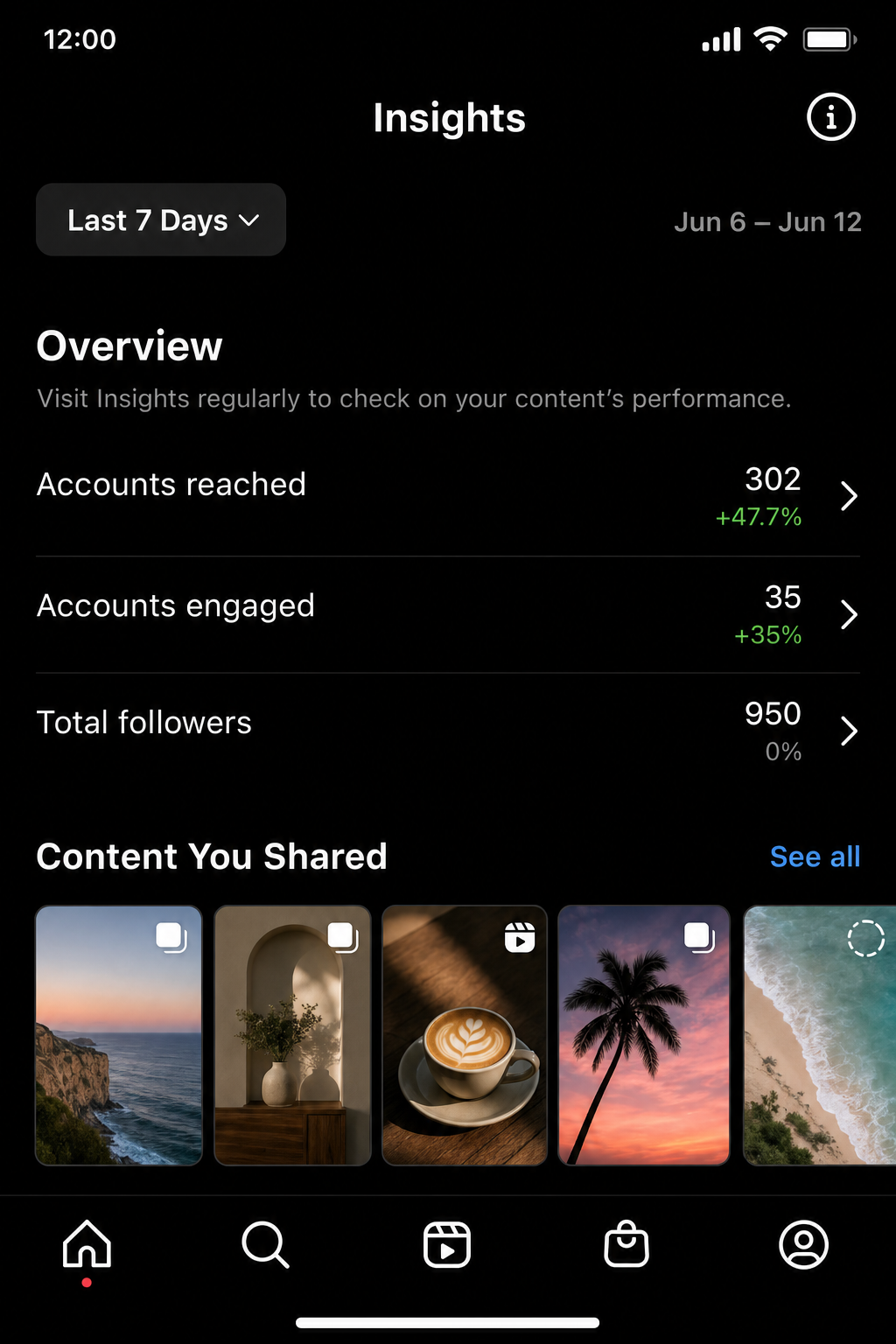
The metrics that matter most:
- Reach and plays, how many people are seeing your content
- Watch time, especially important for Reels; low watch time means people are scrolling past
- Saves and shares, these are quality signals that tell the algorithm your content is worth spreading
- Follower growth, are new people finding and following you?
- Story replies and exits, are people engaging with your Stories or tapping away?
Keep it simple: pick 1–2 metrics that align with your current goal (reach and followers if you’re growing; link clicks if you’re trying to drive sales), review them weekly, and double down on whatever’s performing best. Try one new content format or feature each month to keep things fresh.
Step 7: Land Brand Deals and Start Monetizing
Once you’ve built a consistent posting habit, grown an engaged audience, and have some solid content to show for it, it’s time to start monetizing. You don’t need to wait until you hit some magic follower number. Brands are actively looking for micro and nano influencers in 2026.
Create a Media Kit
A media kit is basically your influencer resume, a one or two-page document (PDF or webpage) that shows brands who you are, who your audience is, and what working with you looks like. Include:
- A short bio and niche description
- Your follower count and key demographics (age, location, gender)
- Your average engagement rate
- Examples of past content (or brand collaborations if you have them)
- Your rates or a note that pricing is available on request
Find Brands to Work With
There are a few ways to get in front of brands:
- Tag brands organically: Post content featuring products you already use and love, tag the brand, and make it easy for them to find you. This works better than most people think.
- Reach out directly via DM or email: Keep it short, introduce yourself, mention why you’d be a good fit, and attach your media kit.
- Join influencer platforms: Platforms like Aspire, Upfluence, and Impact.com connect creators with brands looking for influencer partnerships. These have matured a lot since 2022 and are worth signing up for.
Consider the UGC Route
Here’s something most influencer guides don’t mention: you don’t have to have a big following to start making money from content creation. UGC creators (User-Generated Content creators) produce videos and photos for brands to use on their own social channels and ads, without ever posting to their personal Instagram. If you’re good at creating content but still building your audience, this is a legit way to start earning while you grow.
Should You Focus All Your Energy on Instagram?
Probably not, and this is actually more important advice in 2026 than it was a few years ago. Instagram’s algorithm changes constantly, and direct monetization programs on the platform have come and gone without much warning. Putting all your eggs in one basket is risky.
The smartest influencers treat Instagram as their primary discovery channel but build their real business off-platform. That means growing an email list, creating a YouTube channel or podcast, or selling digital products through your own website. That way, if Instagram changes the rules tomorrow (and it will), you’re not starting from zero.
Cross-posting content to TikTok, YouTube Shorts, or Facebook is also a great way to reach new audiences without a ton of extra work, especially if you’re already making Reels.
Tips and Troubleshooting
Common Issues
Problem: My Reels are getting views but no new followers.
This usually means your content is entertaining or interesting, but your profile isn’t compelling enough to make people want to stick around. Fix it by:
- Making sure your bio clearly explains who you help and what you post about
- Ensuring your Reels are actually relevant to your niche (viral content that’s off-topic attracts the wrong audience)
- Adding a CTA at the end of your Reels like “Follow for more [topic] tips”
Problem: My reach suddenly dropped and I think I’ve been shadowbanned.
Shadowbanning is when Instagram quietly limits your content’s reach without telling you. It can happen due to sudden changes in your posting frequency, low video retention, using banned hashtags, or content that violates community guidelines. To recover:
- Take a short break from posting (2–3 days) and then come back with high-quality content
- Audit your recent posts for anything that might violate guidelines
- Focus on improving watch time and saves, as these signal to the algorithm that your content is worth distributing
Problem: I’m posting consistently but not growing.
Consistency is necessary but not sufficient on its own. Check whether:
- Your niche is too broad, try going more specific
- Your hooks are weak, the first 2–3 seconds of every Reel need to stop the scroll
- You’re engaging with your community, are you replying to comments and DMs?
- You’re collaborating, collab posts with other creators are one of the fastest growth levers available
Pro Tips
- Use AI as a brainstorming partner: Tools like ChatGPT or Claude are great for generating hook ideas, drafting captions, and planning content calendars. They won’t replace your authentic voice, but they’ll save you hours every week.
- Batch your content creation: Pick one day a week to film and edit multiple Reels at once. It’s way more efficient than trying to create something new every single day.
- Enable closed captions on your Reels: A large portion of Instagram users watch videos without sound. Subtitles keep them watching, and watch time is everything for Reels distribution.
- Always be testing: Try one new format or feature every month. Instagram consistently rewards creators who adopt new features early.
- Keep your Highlights updated: Stale Highlights that reference old content or expired offers make your profile look inactive. Review them every few months.
Wrapping Up
Becoming an Instagram influencer in 2026 is less about going viral and more about building something real: a clear niche, a consistent content strategy centered on Reels and Stories, and a genuine community that actually engages with what you post. Do those things well, and the brand deals and monetization opportunities will follow naturally.
If there’s one thing to take away from all of this, it’s to start before you feel ready. Your first few Reels will probably be rough, everyone’s are. The creators who make it aren’t the ones who waited until everything was perfect; they’re the ones who kept showing up, kept learning from their analytics, and kept adjusting. You’ve got everything you need to get started right now.