
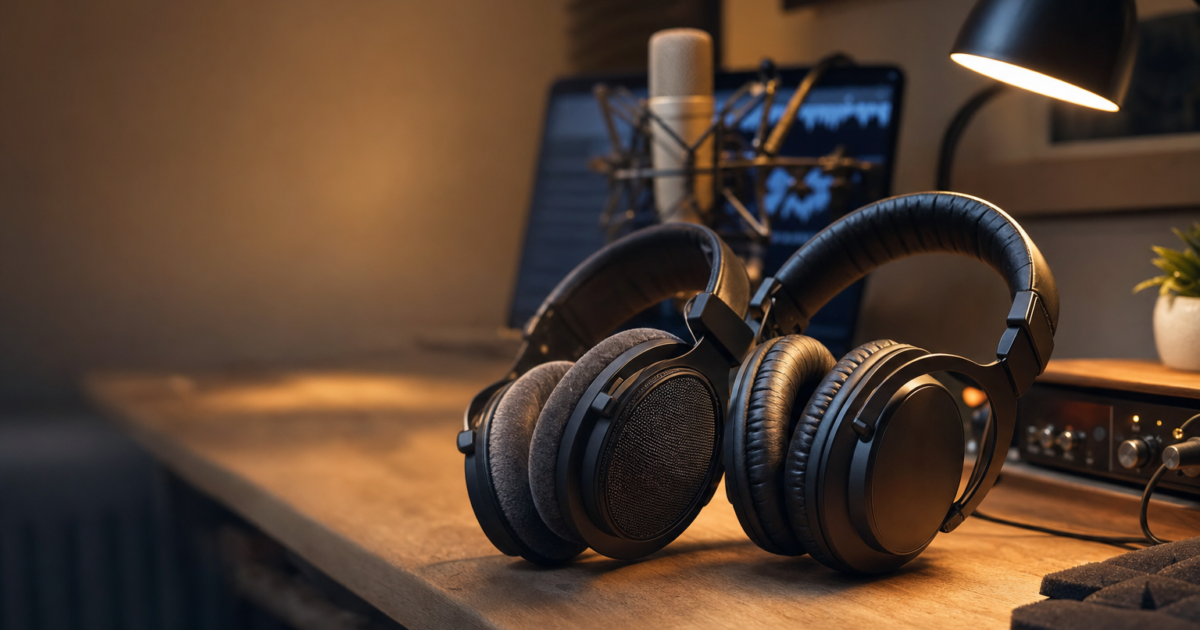
Ever recorded a vocal take that sounded great in your headphones, only to play it back on speakers and realize the bass was completely off? That’s what happens when you’re using the wrong headphones for the job. Studio headphones are built to give you an honest, accurate picture of your audio, no flattering boosts, no hiding problems. And whether you’re recording music, editing a podcast, or mixing a full track, that honesty is everything.
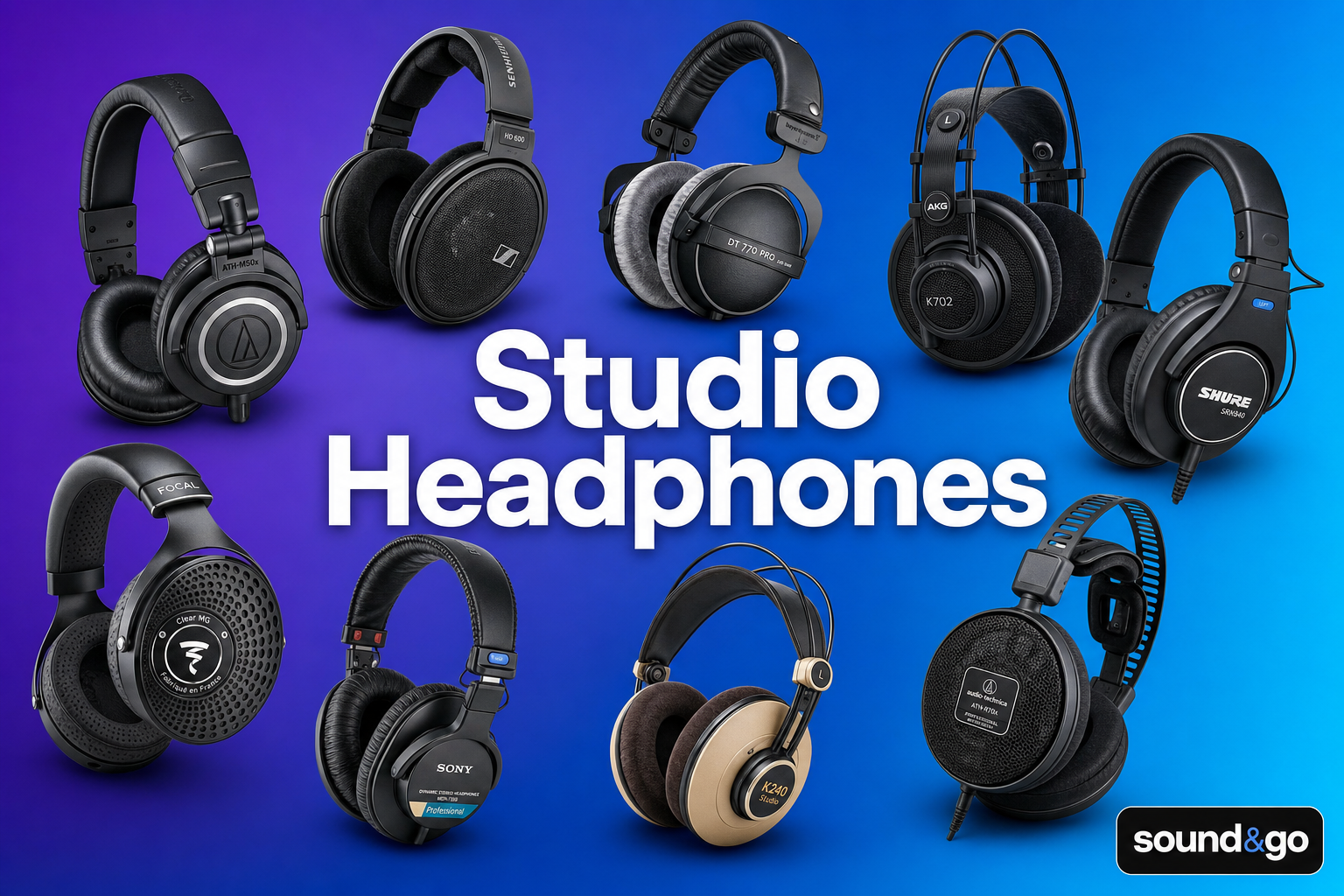
In this guide, we’ve rounded up the 9 best studio headphones in 2026, a mix of proven classics and newer models that have earned their place in the lineup. We’ll also help you figure out which type is right for your specific situation, because (spoiler alert) the best headphones for recording vocals are not the same as the best ones for mixing a full track.
Do You Really Need Studio Headphones?
Short answer: yes, absolutely. Using a gaming headset or your everyday Bluetooth earbuds for studio work is a bit like trying to paint a portrait using a house paintbrush. You can do it, but you’re going to miss a lot of detail. Consumer headphones are designed to make music sound fun and exciting, which usually means boosted bass and hyped-up treble. That sounds great for casual listening, but it’s terrible for making production decisions. If your headphones are lying to you about what your mix sounds like, your finished product is going to suffer for it.
Studio headphones, on the other hand, are tuned to be as flat and neutral as possible. They’re designed to reveal problems, not hide them. That said, there’s an important distinction to understand before you buy: closed-back vs. open-back headphones. These aren’t just design preferences. They’re built for completely different jobs.
Closed-Back vs. Open-Back: Which Do You Need?
This is probably the most important decision you’ll make when buying studio headphones, so let’s break it down clearly.
Closed-Back Headphones (Best for Recording/Tracking)
Closed-back headphones have sealed ear cups that block sound from leaking in or out. Think of them like noise-isolating earmuffs that also happen to play audio. They’re the go-to choice when a microphone is live in the room, because if sound leaks out of your headphones and into the mic, you’ll hear a faint echo of your backing track in every recording. Not ideal.
- Pros: Strong isolation, great for performers and vocalists, prevents bleed into microphones
- Cons: Sound can feel “in your head” rather than spacious, which makes mixing decisions trickier
- Best for: Recording vocals, tracking instruments, podcasting, voiceovers
Open-Back Headphones (Best for Mixing/Mastering)
Open-back headphones have perforated or mesh ear cups that let air (and sound) pass through freely. This creates a much more natural, speaker-like soundstage, meaning the audio feels like it’s coming from around you rather than inside your skull. That makes it much easier to make accurate mixing decisions.
- Pros: Wide, natural soundstage, more accurate stereo imaging, less ear fatigue in long sessions
- Cons: Sound leaks in and out, so these are useless in noisy environments and a no-go when mics are live
- Best for: Mixing, mastering, critical listening in a quiet room
The modern consensus from pros and reviewers in 2026 is this: ideally, you want one closed-back pair for recording and one open-back pair for mixing. On a budget? Start with a good neutral closed-back, use it for everything, and add an open-back later as a secondary reference. We’ve got picks for both below.
How to Choose the Right Studio Headphones
Beyond the open vs. closed decision, here are the key things to think about before you buy:
- Define your main use case: Recording, mixing, podcasting, or all three? Your answer changes which features matter most.
- Set a realistic budget: Entry level runs about $70–$150, mid-range is $150–$350, and pro-grade starts around $350 and up.
- Check impedance vs. your gear: Impedance (measured in ohms) affects how much power your headphones need. If you’re plugging into a laptop or basic audio interface, stick to headphones at 80 ohms or lower. Higher-impedance models (like 250–300 ohm options) sound their best with a dedicated headphone amp or a high-quality audio interface.
- Prioritize comfort: You might be wearing these for 4–8 hours at a stretch. Clamp force, pad material, and weight all matter more than you’d think, especially with heavier planar magnetic models.
- Look for replaceable parts: Detachable cables and swappable ear pads mean your headphones can last for years without becoming a throwaway purchase.
- Avoid Bluetooth for serious work: Wireless headphones introduce latency (a slight delay) and audio compression that makes them unsuitable for recording or critical mixing. Stick to wired for studio use.
A Note on Mixing With Headphones
Even the best studio headphones have one weakness: they don’t perfectly replicate how audio sounds on speakers. If you’re doing serious mixing work on headphones, it’s worth looking into crossfeed or room simulation plugins, which are software tools that make headphone audio sound more like it’s coming from speakers in a real room. Popular options include Sonarworks SoundID Reference, Waves Nx, and the Steven Slate Audio VSX system. These are especially useful if you’re working in an untreated home studio where your room acoustics aren’t ideal.
The 9 Best Studio Headphones in 2026
We’ve organized these picks by use case, closed-back options for tracking and recording first, then open-back options for mixing and mastering, and finally a couple of specialist picks worth knowing about.
Best Closed-Back Studio Headphones
1. Beyerdynamic DT 770 Pro X, Best Closed-Back Overall
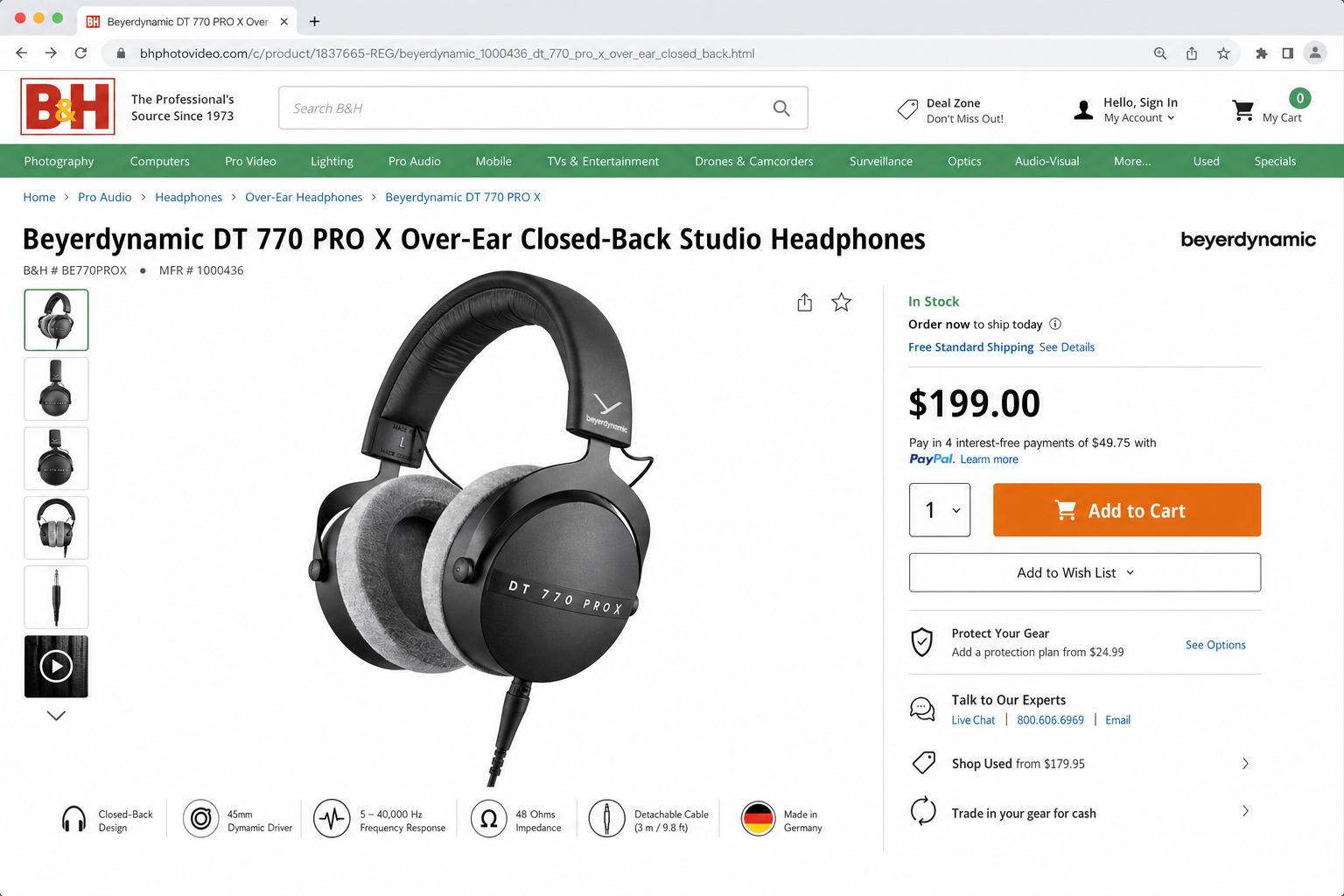
The DT 770 Pro X is Beyerdynamic’s modern evolution of their legendary DT 770 line, and it’s consistently ranked as one of the top closed-back studio headphones in 2026 by MusicRadar and other major outlets. It uses Beyerdynamic’s STELLAR.45 driver technology, a newer transducer design that delivers cleaner, more balanced sound compared to the older DT 770 Pro. The result is excellent isolation with a frequency response that’s more neutral and less harsh in the high end than its predecessor.
At 48 ohms impedance, it’s easy to drive from a laptop headphone jack or a basic audio interface without needing a separate amp, which is a real practical advantage. The ear pads use memory foam with soft velour covering, and the passive cushioning makes this one of the more comfortable closed-back options for long sessions. Frequency response runs from 5Hz to 40kHz, and the passive isolation (30–50dB attenuation depending on frequency) is solid enough to keep click tracks and backing tracks from bleeding into your microphone.
If you’re building a home studio and only buying one closed-back pair, this is probably where we’d start in 2026.
- Type: Closed-back, over-ear
- Impedance: 48 ohms
- Frequency Response: 5Hz – 40kHz
- Best for: Recording, tracking, home studio monitoring
2. RØDE NTH-100, Best for Podcasters and Voice Artists
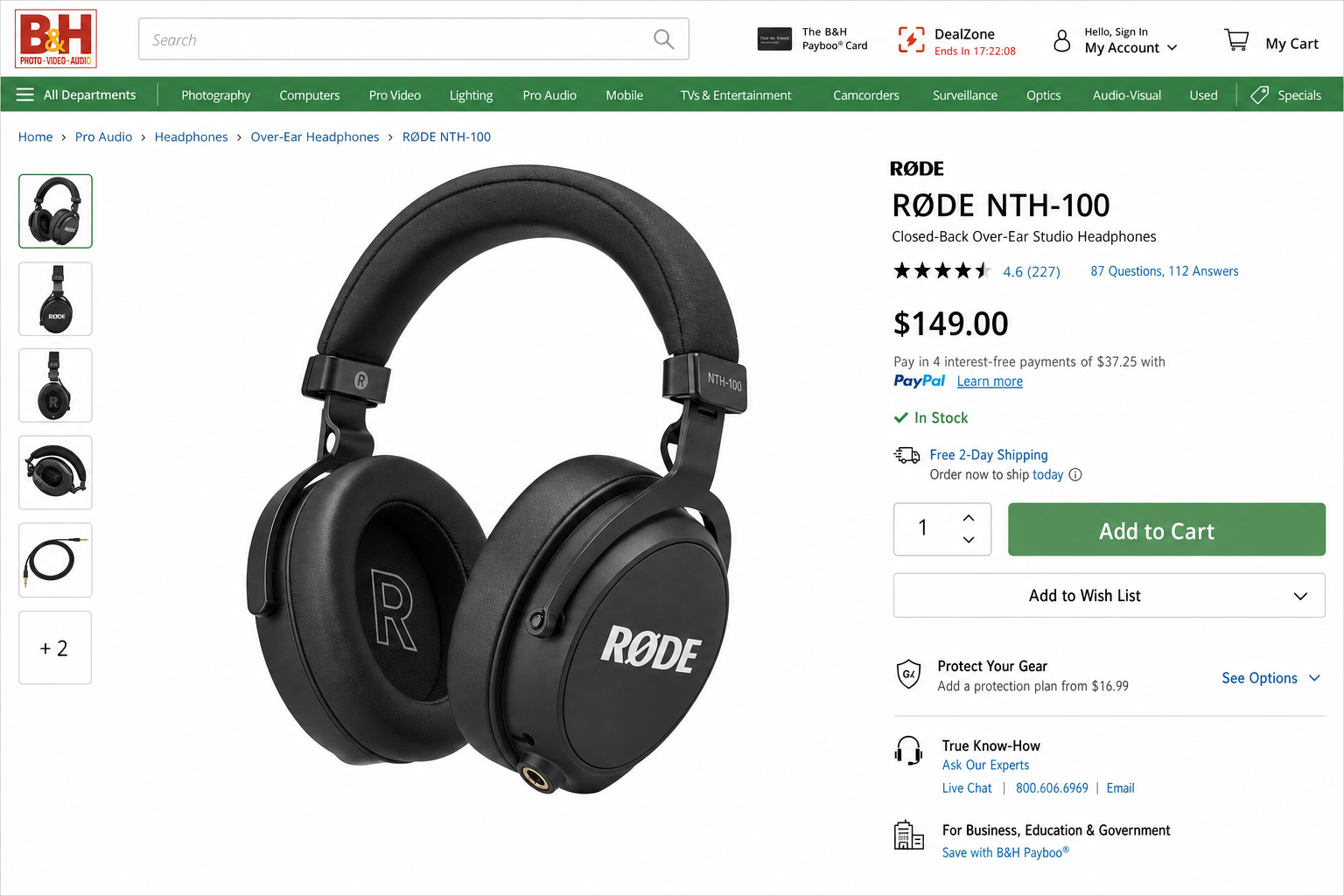
RØDE is best known for microphones, but their NTH-100 headphones have quietly become a go-to recommendation in 2025–2026 for anyone doing voice work, podcasting, or editing. They’re closed-back with a specifically neutral studio tuning, meaning they’re not trying to flatter your audio, they’re trying to tell you the truth about it. That’s exactly what you want when you’re editing dialogue or checking a voiceover for consistency.
Comfort is a genuine standout here. The NTH-100 uses a self-tensioning headband that adjusts automatically to your head shape, which sounds like a small thing until you’ve been wearing headphones for six hours and your temples are screaming. The ear pads are generously padded and create a good seal for isolation. Impedance sits at 32 ohms, so these will work fine straight out of your laptop, phone, or audio interface without any extra amplification.
For podcasters, editors, and voice artists, this is a very solid choice, and one that’s been earning consistent praise in recent buying guides.
- Type: Closed-back, over-ear
- Impedance: 32 ohms
- Frequency Response: 20Hz – 20kHz
- Best for: Podcasting, voiceovers, editing, tracking
3. Sony MDR-7506, The Reliable Industry Standard
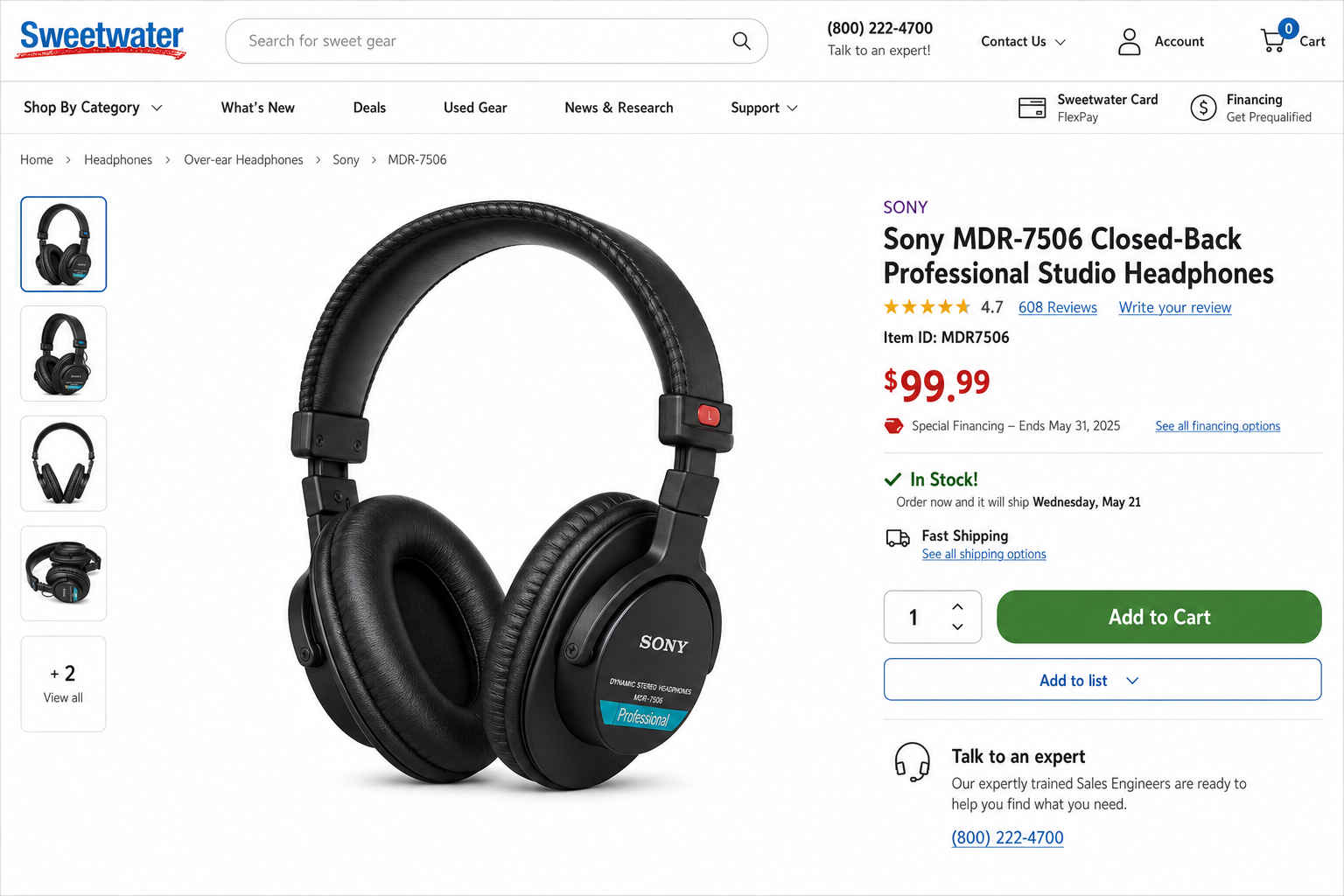
The Sony MDR-7506 has been in production for decades, and there’s a reason it’s still in virtually every broadcast studio, radio station, and recording booth you’ll walk into in 2026. It’s not the flashiest option on this list, but it’s reliable, accurate, and comfortable enough for long sessions. It also folds up flat for easy transport, which is a bonus if you’re moving between locations.
The MDR-7506 has 40mm drivers with neodymium magnets and a frequency response of 10Hz–20kHz. Impedance is 63 ohms, which works fine with most audio interfaces and laptop headphone jacks. The sound leans slightly bright in the high-mids, which actually makes it great for catching sibilance and other vocal issues during tracking and editing. It’s also one of the more affordable options on this list, making it a smart first studio headphone for beginners.
If you want something that professionals have trusted for years and that won’t let you down, the MDR-7506 is still a genuinely excellent pick.
- Type: Closed-back, over-ear
- Impedance: 63 ohms
- Frequency Response: 10Hz – 20kHz
- Best for: Broadcasting, tracking, podcasting, budget-conscious beginners
4. Audio-Technica ATH-M50x, Best All-Rounder for Beginners
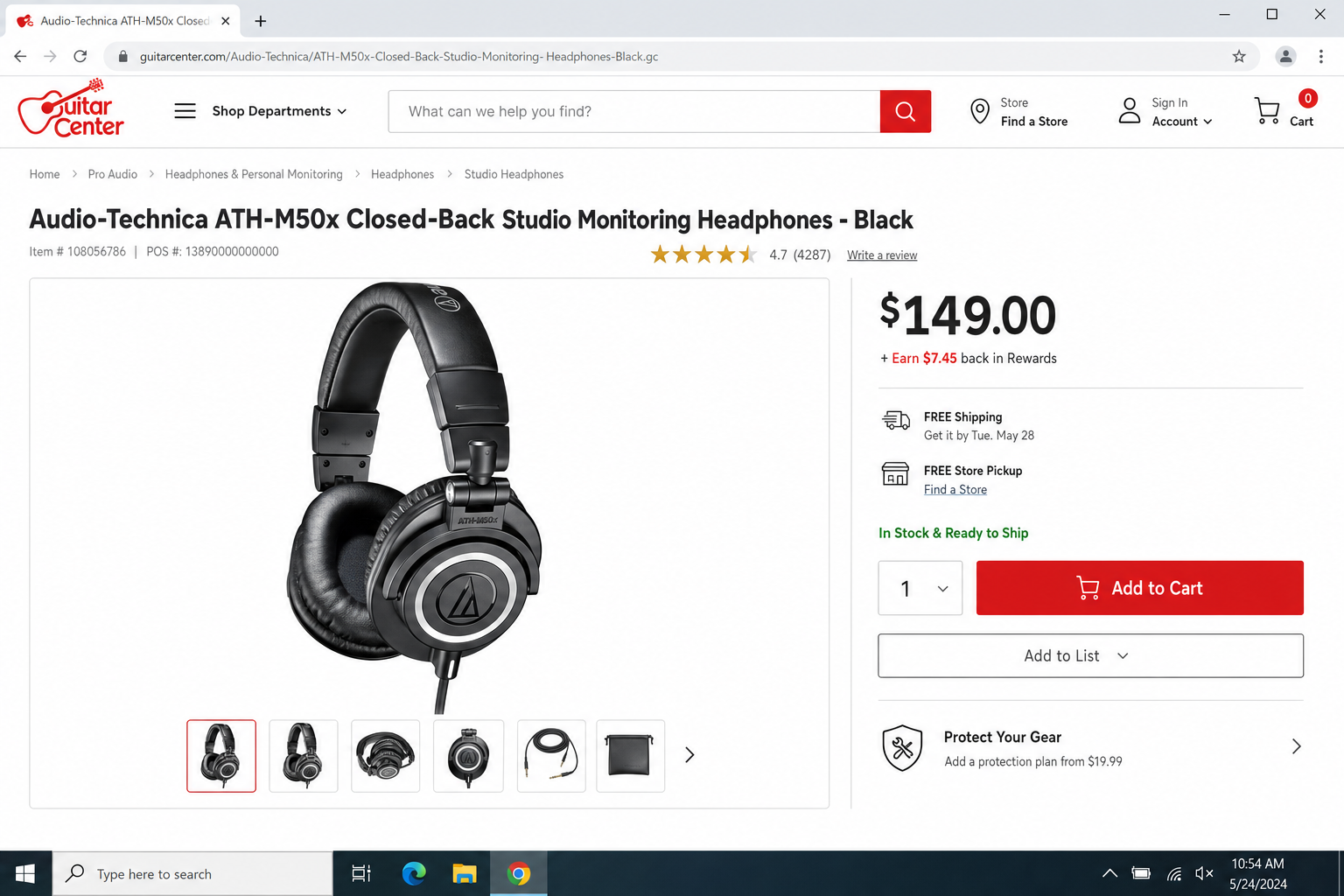
The ATH-M50x is probably the most recommended beginner studio headphone on the internet, and honestly, that reputation is well-earned. It’s comfortable, foldable, durable, has a detachable cable (a feature worth appreciating, since cables die, and being able to replace just the cable instead of the whole headphone is great), and delivers solid audio quality for the price.
The sound profile is slightly V-shaped, meaning the bass and treble are a touch more emphasized than pure flat reference headphones. That makes it a bit more fun to listen to than something like the MDR-7506, but also slightly less accurate for critical mixing decisions. For tracking, editing, and general monitoring though, it’s excellent. The 45mm large-aperture drivers with rare-earth magnets and copper-clad aluminum wire voice coils deliver clear, detailed audio. Impedance is 38 ohms, so it works with basically any device without needing an amp.
Just be aware that if you’re doing serious mixing work, you’ll eventually want to cross-reference on something more neutral. But as a first studio headphone that does a bit of everything, the ATH-M50x is hard to beat.
- Type: Closed-back, over-ear
- Impedance: 38 ohms
- Frequency Response: 15Hz – 28kHz
- Best for: Beginners, general studio use, tracking, on-the-go monitoring
Best Open-Back Studio Headphones
5. Sennheiser HD 490 Pro, Best Open-Back Overall
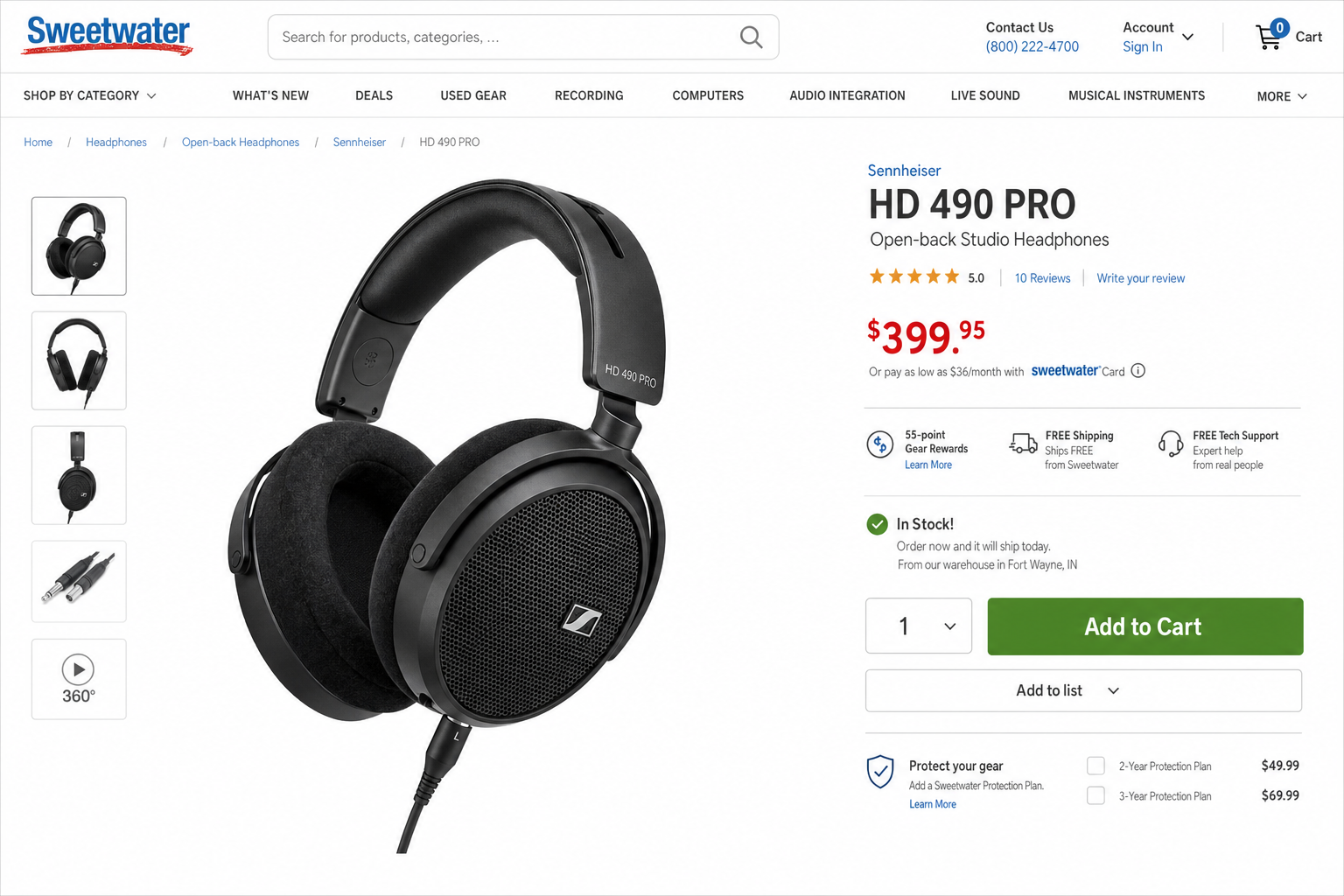
If you ask most professional engineers and reviewers in 2026 what the best studio headphone for mixing is, a huge number of them will say the Sennheiser HD 490 Pro. It’s been consistently ranked as the top overall studio headphone pick by MusicRadar, SoundGuys, and other major outlets, and after spending time with it, it’s easy to see why.
The HD 490 Pro delivers an exceptionally detailed, neutral sound with a wide, natural soundstage that makes it much easier to place instruments in a mix and catch subtle issues. One genuinely clever feature: it ships with two sets of ear pads, one for a more neutral reference tuning and one that’s slightly warmer, so you can actually tune the sound character slightly to your preference. That’s a thoughtful touch that shows Sennheiser designed this specifically for serious studio work.
Comfort is also excellent for long sessions. The clamping force is light, the pads are plush, and the headband is well-padded. Impedance is 150 ohms, so you’ll want a decent audio interface or headphone amp to get the best out of these. Plugging straight into a laptop headphone jack will technically work, but you won’t be getting the full picture.
- Type: Open-back, over-ear
- Impedance: 150 ohms
- Frequency Response: 6Hz – 38kHz
- Best for: Mixing, mastering, critical listening, professional studios
6. Sennheiser HD 650, The Trusted Classic for Mixing
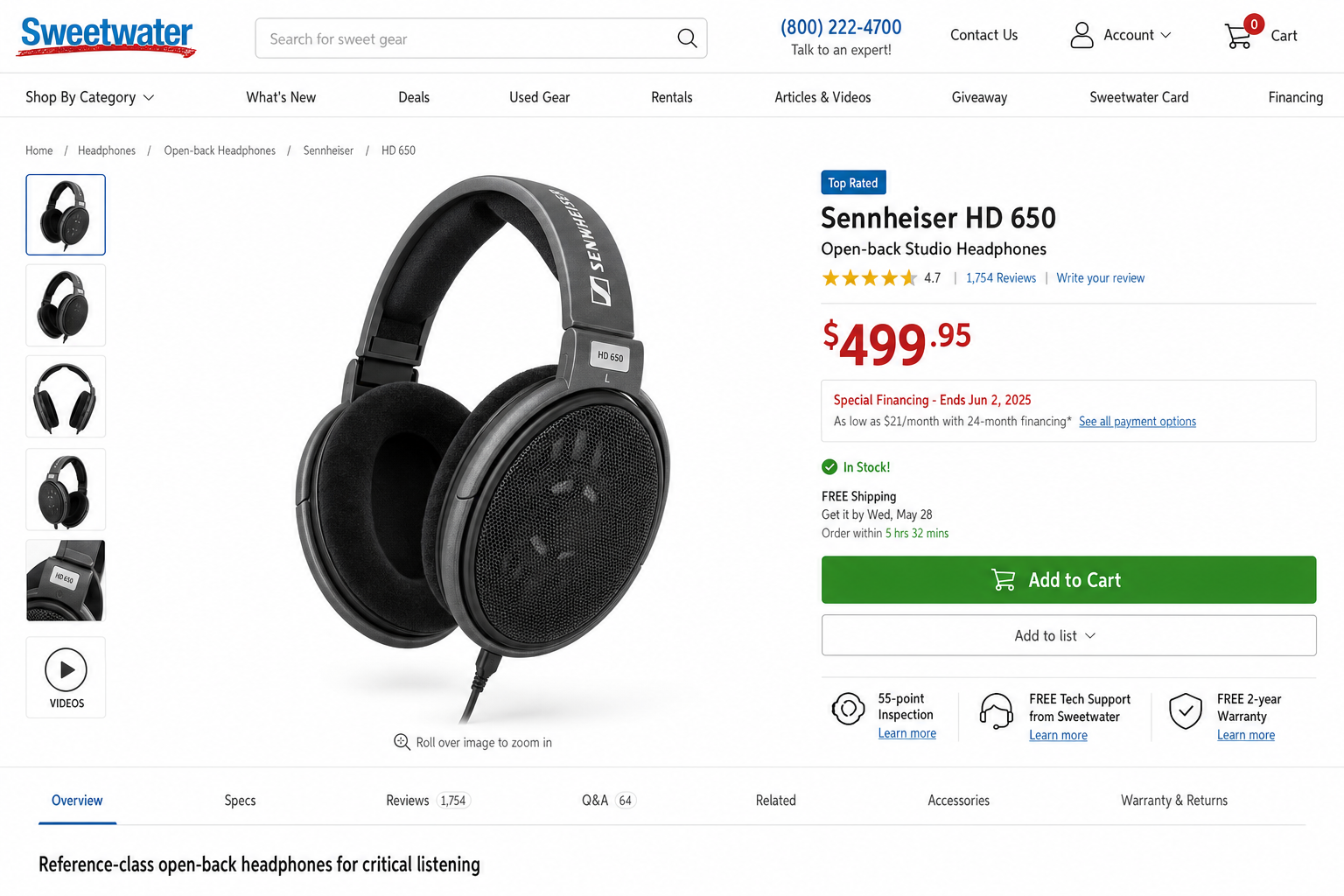
The HD 650 has been a favorite among audio professionals for well over a decade, and it’s still showing up in 2026 buying guides as one of the best value options for mixing and mastering. There’s a reason it won’t go away: it just sounds really, really good. The open-back design creates a spacious, natural soundstage, and the frequency response is smooth and detailed without being fatiguing.
The ear cups are shaped and padded in a way that makes them feel almost weightless on your head, making them genuinely one of the more comfortable headphones you’ll ever wear for an extended session. Frequency response runs from 10Hz to 41kHz, and the dynamic drivers with neodymium magnets deliver practically zero inter-modulation distortion (that’s the kind of distortion that muddies up complex mixes with lots of instruments playing at once).
The catch: at 300 ohms impedance, the HD 650 needs a proper headphone amp or a high-quality audio interface to shine. Plug it into your laptop’s headphone jack and it’ll sound quiet and thin. Feed it properly and it opens up beautifully. If you’ve already got a decent interface, this is a fantastic mixing headphone at a very reasonable price point for what you’re getting.
- Type: Open-back, over-ear
- Impedance: 300 ohms (requires headphone amp or quality interface)
- Frequency Response: 10Hz – 41kHz
- Best for: Mixing, mastering, long-session monitoring
7. AKG K712 Pro, Most Comfortable Open-Back
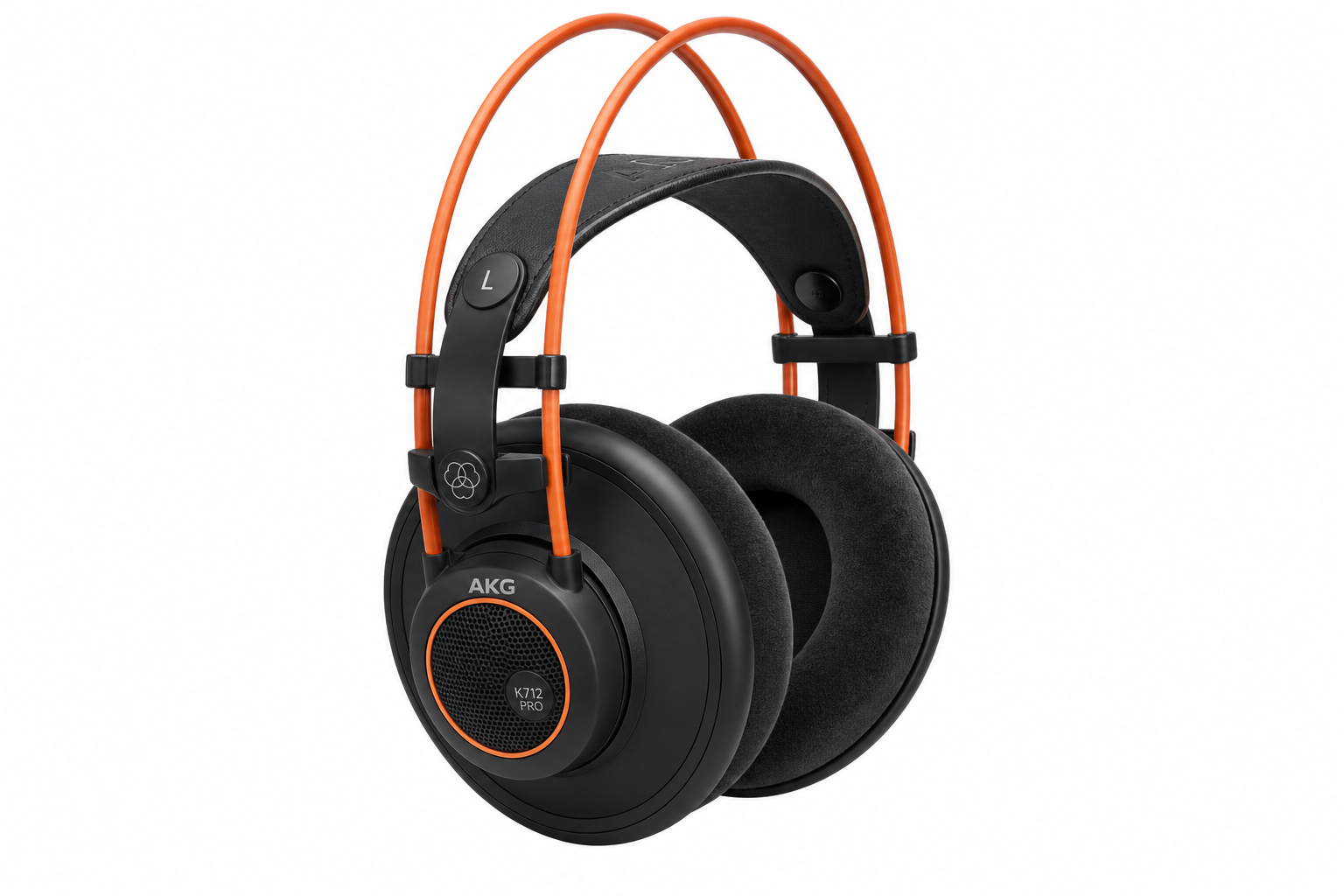
The AKG K712 Pro keeps appearing in 2026 “best studio headphones” roundups for two main reasons: it sounds great, and it might be the most comfortable open-back headphone you’ll ever put on your head. The self-adjusting headband and 3D-form ear pads distribute the weight so evenly that you genuinely forget you’re wearing headphones after a few minutes. For engineers who spend 8+ hours a day in headphones, that matters enormously.
Sound-wise, the K712 Pro has a slightly warm, neutral character with excellent detail in the midrange, which is great for vocals, acoustic instruments, and anything where you need to hear fine nuances clearly. The 50mm drivers deliver a wide frequency response (10Hz–39.8kHz) and the open-back design gives you a spacious, airy soundstage. Impedance is 62 ohms, which is refreshingly manageable for an open-back reference headphone. You can drive these reasonably well from a good audio interface without needing a separate amp.
If comfort is your top priority alongside solid reference-quality sound, the K712 Pro is a genuinely excellent pick.
- Type: Open-back, over-ear
- Impedance: 62 ohms
- Frequency Response: 10Hz – 39.8kHz
- Best for: Mixing, mastering, long sessions, vocal and acoustic instrument work
8. Beyerdynamic DT 990 Pro, Best Budget Open-Back
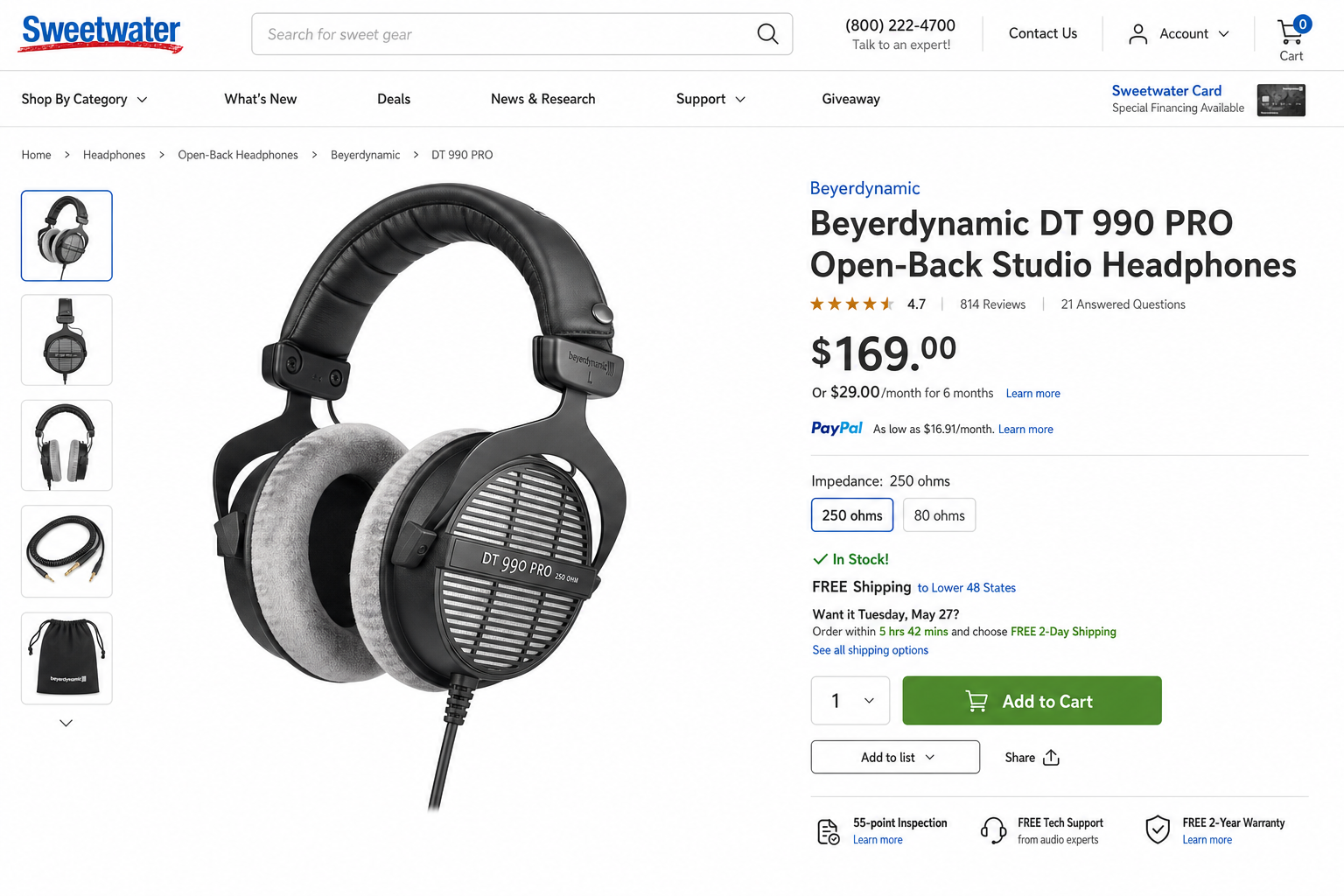
If you want a professional open-back studio headphone without spending a fortune, the DT 990 Pro is one of the best options at its price point. It’s been a staple of mid-range studio setups for years, and it’s still holding up well in 2026. The open-back design delivers a wide soundstage, and the frequency response (5Hz–35kHz) covers everything you’d need for mixing and mastering work.
The sound leans slightly bright. The high frequencies are a bit more forward than something like the HD 650, which some engineers love for catching detail in cymbals, reverb tails, and high-frequency effects, while others find it a bit tiring over long sessions. The bass is punchy and present, though sub-bass (the really deep low end) is a bit light. Lows, mids, and vocals are well-balanced and clear.
One important note: at 250 ohms impedance, the DT 990 Pro needs a headphone amp or a quality audio interface to sound its best. The cable is also not detachable (a minor annoyance), but the build quality is sturdy enough that this shouldn’t be a problem for years of regular use. For the price, this is a solid open-back option for mixing on a budget.
- Type: Open-back, over-ear
- Impedance: 250 ohms (requires headphone amp or quality interface)
- Frequency Response: 5Hz – 35kHz
- Best for: Mixing, mastering, budget-conscious home studios
Best Specialist Pick
9. Shure SRH1840, Best for Audiophile-Grade Mixing
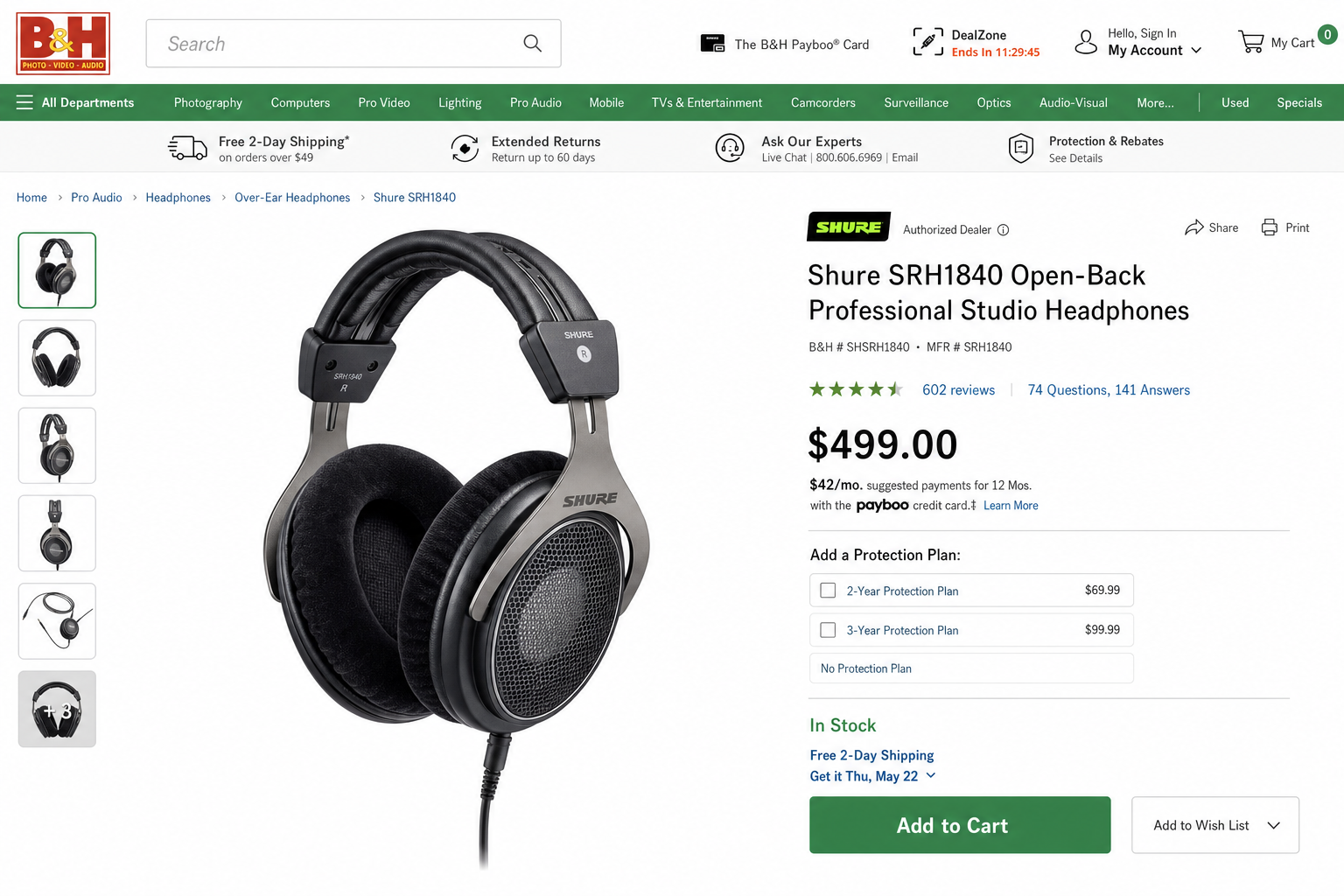
The Shure SRH1840 sits at the higher end of the price spectrum, but for engineers who want audiophile-grade accuracy for mixing and mastering, it’s hard to argue with the results. These open-back headphones use individually matched 40mm neodymium drivers, meaning Shure actually pairs the left and right drivers to ensure they’re acoustically identical, which results in more accurate stereo imaging. A vented center pole eliminates internal resonance, keeping the sound clean and consistent across the entire frequency range.
The sound is exceptionally smooth. Lows and highs both roll off gracefully without harshness, and the bass response is accurate rather than exaggerated. Frequency response runs from 10Hz to 30kHz, with 65-ohm impedance and 96dB/mW sensitivity. The build uses a steel frame for durability, and the cable is detachable (always a plus). Being open-back, there’s no noise isolation, so these are strictly a studio tool and not something you’d use in a noisy environment.
If you’re at a point in your production journey where you’re ready to invest in a serious reference headphone, the SRH1840 is worth the price of admission.
- Type: Open-back, over-ear
- Impedance: 65 ohms
- Frequency Response: 10Hz – 30kHz
- Best for: Professional mixing, mastering, critical listening
Quick Comparison: All 9 Headphones at a Glance
| Headphone | Type | Impedance | Best For | Budget Level |
|---|---|---|---|---|
| Beyerdynamic DT 770 Pro X | Closed-back | 48 ohms | Recording, tracking | Mid-range |
| RØDE NTH-100 | Closed-back | 32 ohms | Podcasting, voice work | Mid-range |
| Sony MDR-7506 | Closed-back | 63 ohms | Broadcasting, tracking | Budget-friendly |
| Audio-Technica ATH-M50x | Closed-back | 38 ohms | General studio use | Budget-friendly |
| Sennheiser HD 490 Pro | Open-back | 150 ohms | Mixing, mastering | Mid-to-high |
| Sennheiser HD 650 | Open-back | 300 ohms | Mixing, long sessions | Mid-range |
| AKG K712 Pro | Open-back | 62 ohms | Mixing, comfort priority | Mid-range |
| Beyerdynamic DT 990 Pro | Open-back | 250 ohms | Budget mixing | Budget-friendly |
| Shure SRH1840 | Open-back | 65 ohms | Pro mixing, mastering | High-end |
Tips and Troubleshooting
My mixes sound great on headphones but terrible on speakers
This is one of the most common frustrations in home studio production, and it almost always comes down to one of these causes:
- You’re using consumer-tuned headphones: Boosted bass and hyped treble will fool you into making mix decisions that don’t translate. Switch to a neutral studio headphone.
- No crossfeed or room simulation: Headphones create an unnatural stereo image where sounds appear to come from inside your head. Tools like Sonarworks SoundID Reference or Slate VSX can simulate a more speaker-like listening environment.
- You’re not checking on multiple references: Always compare your mix on speakers, earbuds, and headphones before calling it done.
My high-impedance headphones sound quiet and thin
If you’ve bought a 250 or 300 ohm headphone (like the DT 990 Pro or HD 650) and it sounds underpowered, that’s because it is. Your source device doesn’t have enough juice to drive it properly. You need a dedicated headphone amp or a quality audio interface with a strong headphone output. Brands like Focusrite, Universal Audio, and MOTU all make interfaces with solid headphone stages.
Do I need separate headphones for recording and mixing?
Ideally, yes. A closed-back pair for recording (to prevent mic bleed) and an open-back pair for mixing (for accurate imaging) is the professional setup. But if you’re on a budget, start with a neutral closed-back like the DT 770 Pro X or RØDE NTH-100, use it for everything, and add an open-back reference headphone later when your budget allows.
Can I use Bluetooth or ANC headphones for studio work?
For casual listening and rough checks, sure. But for any serious recording or mixing work, the answer is no. Wireless headphones introduce latency (a delay between audio and playback) that makes them unusable for monitoring while recording. Active Noise Cancellation (ANC) also applies its own DSP processing to the audio, which means you’re not hearing an accurate representation of your mix. Stick to wired for studio work.
Pro Tips
- Try before you buy if possible: Comfort is deeply personal. Clamp force that one person finds secure, another finds painful. If you can test a pair before committing, do it.
- Invest in ear pad replacements: Ear pads degrade over time and affect both comfort and sound. Most of the headphones on this list have readily available replacement pads, so factor that into your long-term cost.
- Use reference tracks: When mixing on headphones, regularly A/B your mix against a professionally mixed song in a similar genre. It’s the fastest way to catch problems.
- Take breaks: Ear fatigue is real. After 60–90 minutes of focused listening, take a 10-minute break. Your ears will recalibrate and you’ll catch things you missed.
Wrapping Up
Choosing the right studio headphones in 2026 really comes down to knowing what job you need them to do. For recording and tracking, you want a good closed-back pair like the Beyerdynamic DT 770 Pro X or RØDE NTH-100. For mixing and mastering, the Sennheiser HD 490 Pro is the current top pick from most professional reviewers, with the HD 650 and AKG K712 Pro as excellent alternatives depending on your budget and preferences. And if you’re just getting started, the Sony MDR-7506 and Audio-Technica ATH-M50x are proven, affordable workhorses that have earned their spots in studios worldwide for good reason.
Honestly, any of the headphones on this list will be a significant upgrade over consumer earbuds or gaming headsets, so wherever you land, you’re making a solid choice. Start with what fits your budget and your primary use case, and build from there. Your mixes will thank you.