
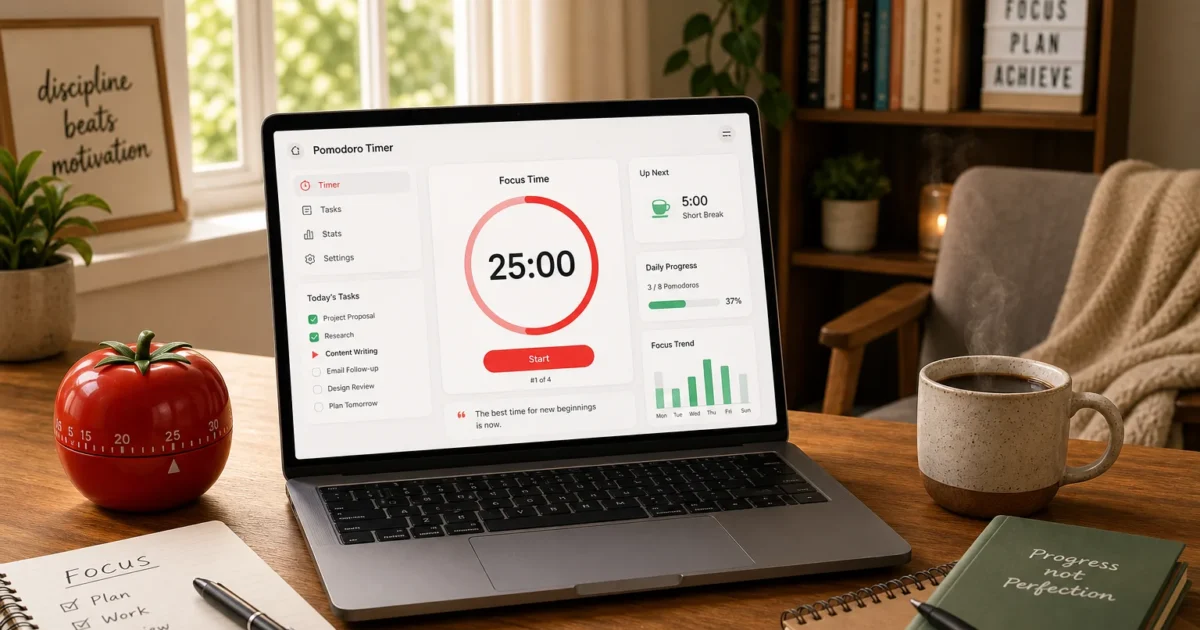
Sitting down to work and actually focusing are two completely different things. If your attention keeps drifting after ten minutes, you’re not alone. The Pomodoro Technique is one of the most practical approaches to structured focus out there. Work in short, timed bursts. Take a break. Repeat. Simple idea, and it genuinely works.
Today’s Pomodoro apps go well beyond a basic countdown. The best ones pair the timer with task lists, session tracking, productivity reports, and even distraction blocking. Here are three worth bookmarking.
What Is the Pomodoro Technique?
Francesco Cirillo developed the Pomodoro Technique in the 1980s. The name comes from the Italian word for tomato; he used a tomato-shaped kitchen timer to clock his work sessions. The core method is simple: dedicate a focused block of time to a single task, take a short break, then repeat.
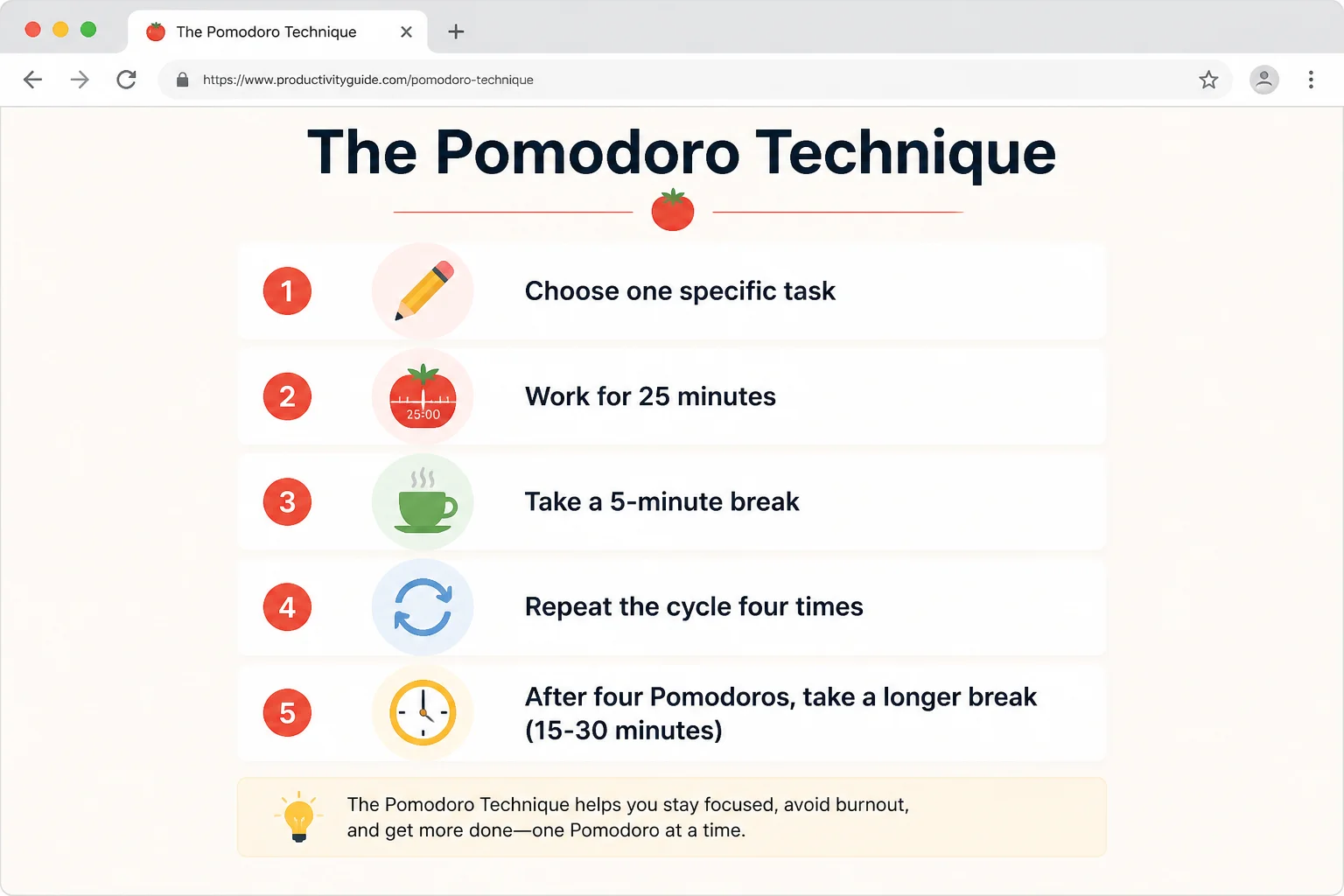
The standard cycle looks like this:
- Work for 25 minutes on a single task. That’s one “Pom” or Pomodoro
- Take a 5-minute break
- Repeat four times, then take a longer break (usually 15 to 20 minutes)
The 25/5 split is the traditional starting point, not a hard rule. Many apps let you adjust the work and break lengths, so if 25 minutes feels too short for deep writing or complex tasks, stretching to 45 or 50 minutes works just fine.
1. Pomofocus: Best for Zero-Fuss Timer Sessions
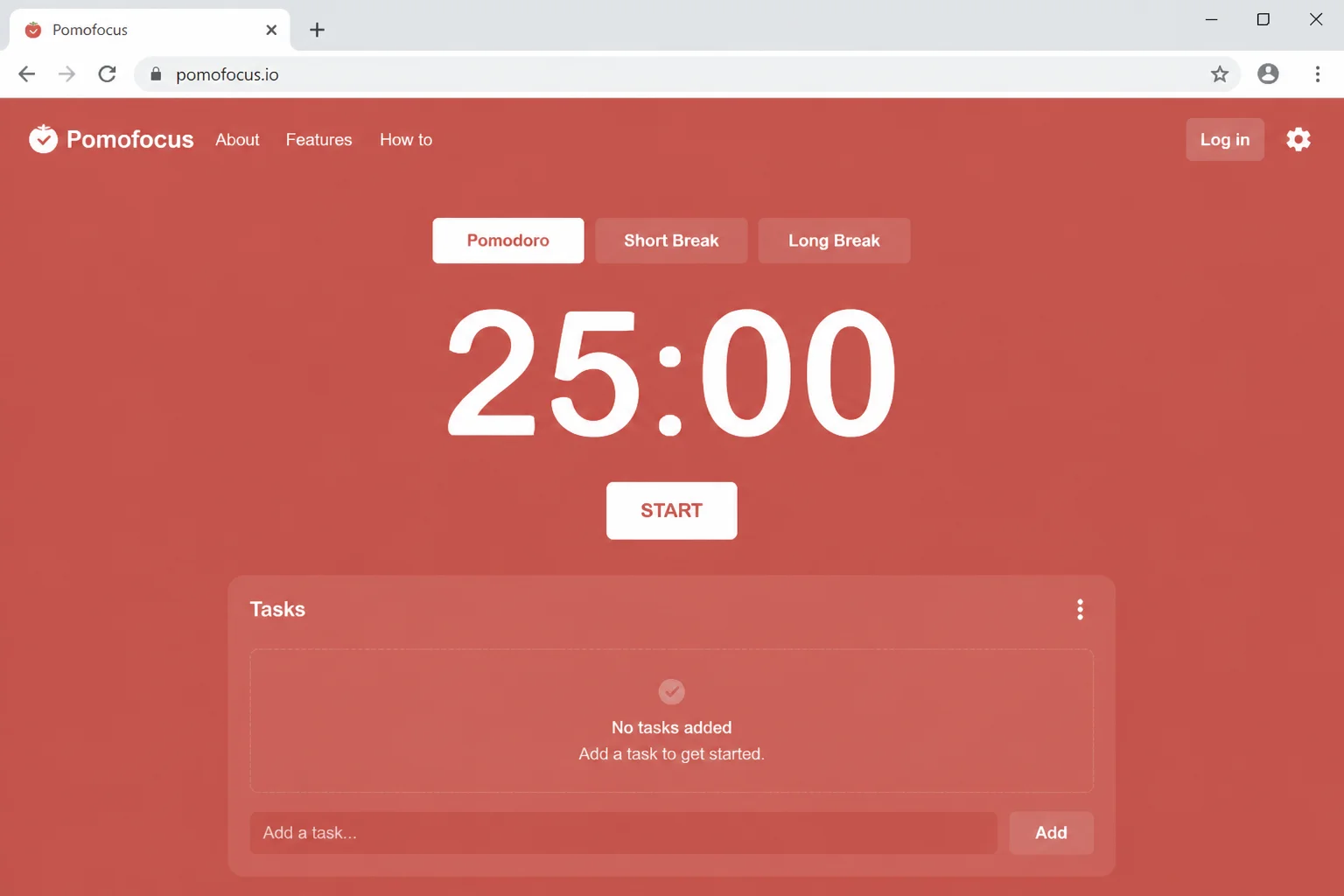
Pomofocus is the simplest option on this list. Open the site, click play, and you’re working. No account, no download, nothing to configure unless you want to.
The timer takes up most of the screen, with a task list directly below it so you can jot down what you’re focusing on before the session starts. When time’s up, it automatically switches to break mode, then back to work. For anyone who just needs the method to run without fuss, this is the one.
The settings menu is there when you want it:
- Adjust work interval, short break, and long break lengths
- Toggle auto-start for sessions and breaks
- Pick your alert sound and enable browser notifications
A free account is optional and unlocks basic session history. Most people skip it. Pomofocus is completely free.
2. Toggl Track: Best for Seeing Where Your Time Actually Goes
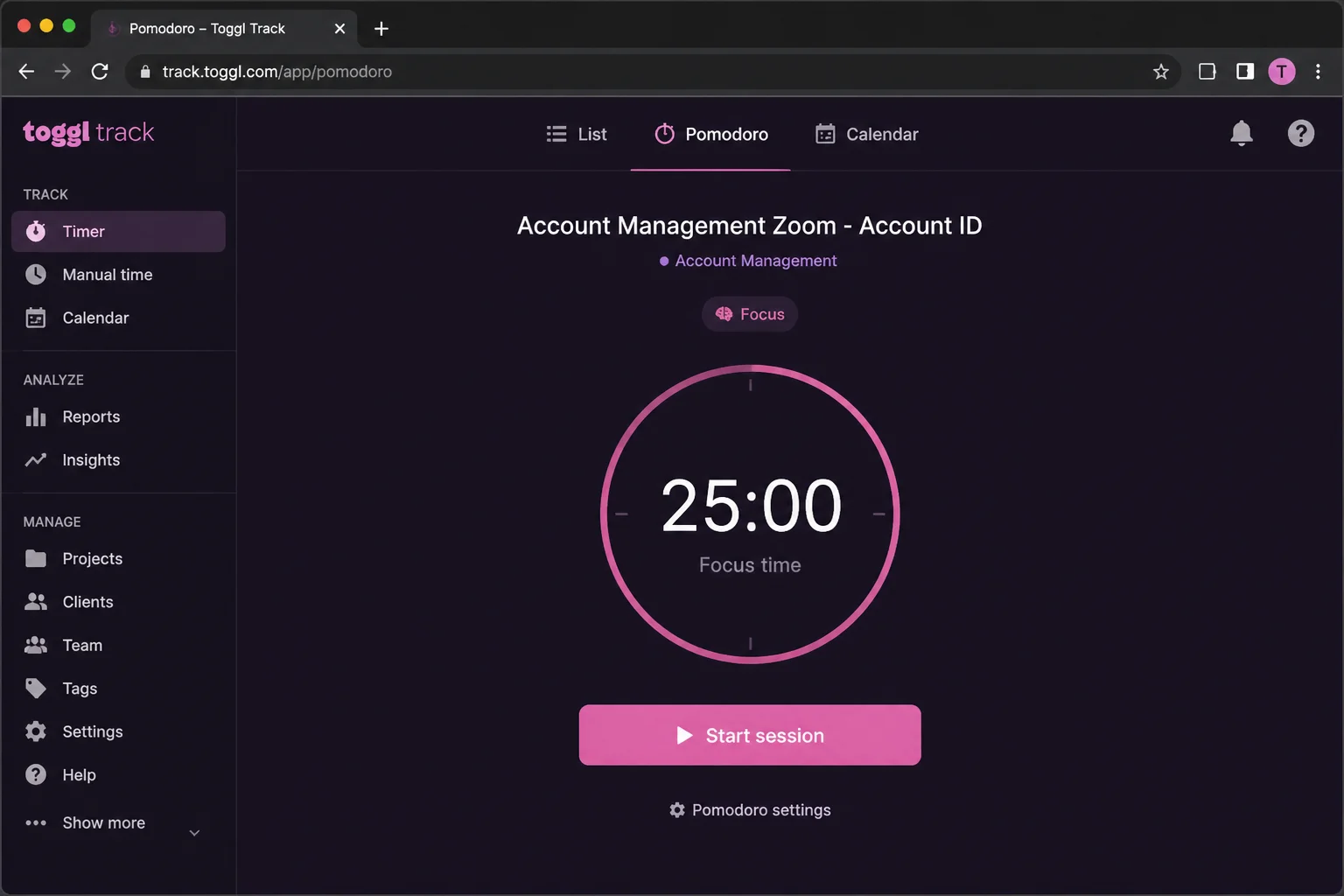
Toggl Track is a full time-tracking platform with a built-in Pomodoro timer, and the combination is more useful than it might sound. You tag each session to a project or client before you start, and Toggl records exactly how long you spent on what. The reports tab breaks it down by day, week, project, or client.
For freelancers billing by the hour, that’s two tools in one. For everyone else, it’s an honest look at where your workday actually goes, which can be a little humbling.
What you get:
- Built-in Pomodoro timer with adjustable intervals
- Time tracking by project, client, and tag
- Daily, weekly, and monthly productivity reports
- Available on web, Windows, macOS, iOS, and Android
The free plan covers everything a solo user needs. Paid plans add team features and more granular reporting.
3. Forest: Best If You Need a Motivational Push
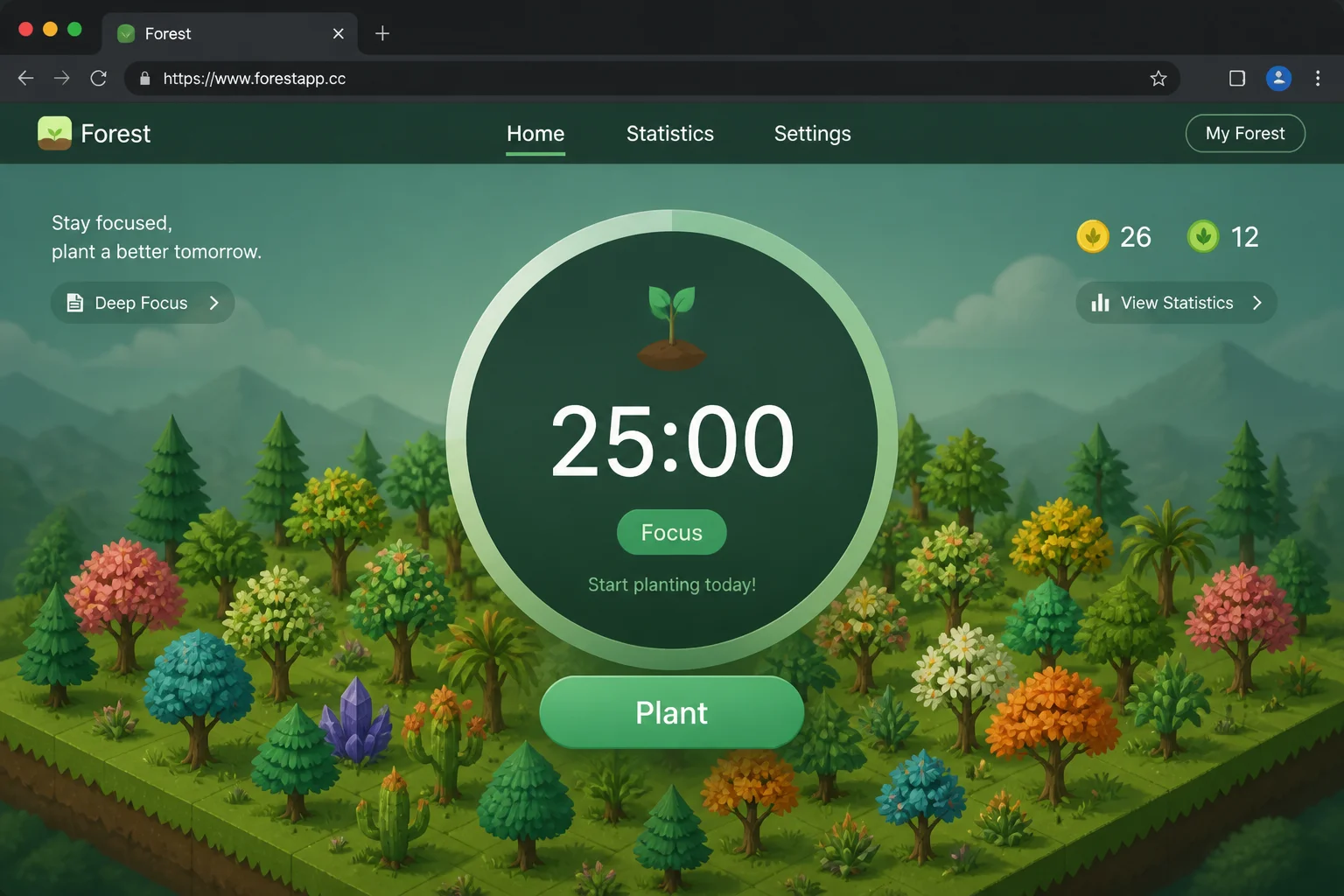
Forest works differently from the other two. Start a session and you plant a virtual tree. Stay focused and it grows; leave the app before the timer ends, and the tree dies. Completed sessions build into a visual forest over time.
It sounds a little silly, and it works, especially for the kind of distraction driven more by habit than actual need. Watching a virtual tree die because you couldn’t stop yourself from checking Instagram is oddly motivating (and, honestly, a bit embarrassing).
Forest runs on iOS and Android as its main platforms, with a web version and a Chrome extension available too. The free plan covers the core focus sessions; a paid plan adds detailed stats, tag tracking, and a small real-world bonus. Forest donates to tree-planting through Trees for the Future when users spend their in-app currency.
What you get:
- Gamified Pomodoro sessions with visual progress
- Session history and focus stats
- Chrome extension available
- Available on web, iOS, and Android
Quick Comparison
| App | Best For | Free? | Account Needed? |
|---|---|---|---|
| Pomofocus | Zero-setup browser timer | Yes | Optional |
| Toggl Track | Time tracking and reporting | Yes (free plan) | Yes |
| Forest | Gamified focus sessions | Yes (free plan) | Yes |
Tips for Getting More Out of Pomodoro
- Decide on one task before you start. Write it in the task field, then hit play. Starting the timer and then figuring out what to work on wastes the first few minutes of every session.
- Adjust the interval if 25 minutes isn’t clicking. It’s a starting point, not a commitment. Longer sessions of 45 or 50 minutes often work better for deep writing, coding, or anything that takes a while to get into.
- Actually step away during breaks. Stand up, walk around, look out a window. Scrolling your phone during a break doesn’t give your brain a real reset; it just keeps the stimulation going.
- Start with a small target. Two or three focused Poms is a real win when you’re building the habit. Consistency beats volume, especially in the first week.
Wrapping Up
All three of these apps are free and worth trying. Pomofocus is the fastest to get started with. Open a tab, click play. Toggl Track is the right pick if you want actual data on where your hours go. And Forest is a good call if your main struggle is breaking the phone-checking reflex mid-session.
Pick the one that fits how you work, give it a week, and see what you actually get done when you’re working in focused bursts instead of trying to push through hours of scattered attention.